
Repointing typically costs £25–£90 per m² for standard cement mortar, rising to £60–£100 per m² for lime mortar on period properties. A full property repointing usually costs £2,000 to £9,000, depending on the property’s size, mortar type, and access.
If you’ve spotted crumbling, cracked, or missing mortar between your bricks, you’re probably wondering how much repointing costs and what it should cost to repoint your property. It’s a fair question, since prices can vary depending on your property type, the mortar used, and how easy your walls are to access. On older properties, mortar failure often shows up alongside other roof warning signs, so it’s worth having the whole property checked at the same time rather than treating each issue separately.
What Does Repointing Actually Involve?
You’ve probably heard the term before, but here’s the short version: repointing removes deteriorated mortar between bricks and replaces it with fresh mortar. It protects the brickwork, helps prevent water ingress, and extends your walls’ lifespan. At Hibbs Roofing and Building Ltd, our repointing services cover everything from single-wall repairs to full property repoints across Ashford and Kent.
How Much Does Repointing Cost?
Let’s get straight into the numbers. Repointing costs are usually calculated per square metre, although the total cost depends on how much brickwork needs repairing, the mortar required, and where in the UK you live. Most homeowners pay between £25 and £90 per m², with the average repointing cost per m² falling between £40 and £65 once labour and materials are combined.
| Job | Average Cost |
|---|---|
| Single wall (30m²) | £750–£2,000 |
| Single wall (50m²) | £1,250–£3,250 |
| Chimney stack repoint | £500–£1,500 |
| Terraced house (full exterior) | £2,000–£4,500 |
| Semi-detached house (full exterior) | £3,000–£6,000 |
| Detached house (full exterior) | £4,000–£9,000 |
If you’re wondering how much pointing costs for a small repair, expect the price per square metre to be slightly higher than a full property, since labour and set-up costs are spread across a smaller area.
What’s Included in These Prices?
These figures usually cover labour and standard mortar materials, but they won’t always include everything. Keep in mind you may need to budget separately for:
- Scaffolding or tower hire (typically £500–£2,000 for full house access, depending on property size)
- Removal and disposal of old mortar and rubble
- Any brick repairs uncovered once the old mortar is raked out
- Lime mortar, if your property needs it (this can add 20-30% to material costs)
What Affects The Cost Of Repointing?
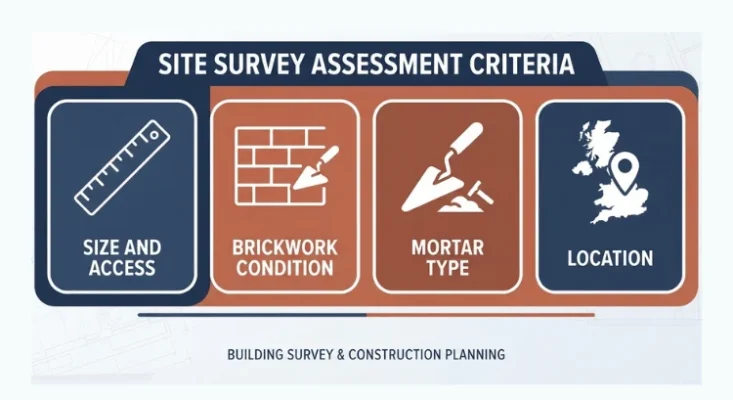
Every property is different, so no two repointing jobs cost exactly the same. The size of the property, the condition of the brickwork, access, and the type of mortar all influence the amount of labour and materials needed, which is why quotes can vary significantly from one home to another. Once you know what a repointing job actually involves and roughly what it costs, it’s worth understanding why one quote can look so different from another for what seems like a similar job.
Size and Number of Walls
The bigger the job, the higher the overall cost, but the price per m² often drops slightly as the job gets larger. A full-house repointing project naturally costs more than repairing a single damaged section because it involves more brickwork, mortar, and labour. Larger projects can also be completed more efficiently, helping to reduce the average cost per square metre.
Ease of Access
Ground-floor walls are straightforward. Chimneys, gable ends, and upper storeys are not. If you need scaffolding or a tower to reach the brickwork safely, it adds time and cost. Difficult access can also slow work, increasing labour time and overall project costs.
Type of Mortar Required
Older and period properties, especially Victorian and Edwardian terraces, were usually built with lime mortar, which flexes with the building and lets moisture escape. Modern cement mortar is cheaper but far too rigid for these older bricks, and using the wrong mix can actually cause damage. Lime mortar work takes more skill and time, so it costs more.
Condition of the Existing Brickwork
If the mortar has failed badly, or if damp has damaged the bricks beneath, the job takes longer and may involve replacing individual bricks in addition to repointing. A professional inspection will usually identify these issues before work begins, including checking for signs of rising damp that failed mortar can sometimes mask or worsen, helping you understand the full scope of the repairs and avoid unexpected costs.
Location in the UK
Labour rates vary by region. Bricklayers in London and the South East typically charge more per day than those in the North of England, which naturally feeds into the overall quote you’ll receive. Higher local labour demand and operating costs can also increase the overall cost of repointing in some parts of the UK.
How A Professional Repointing Job Is Carried Out
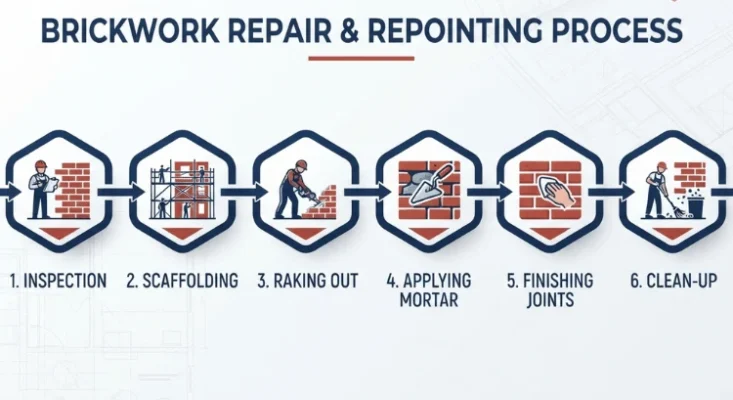
A proper repoint isn’t a quick patch-up job. It follows a fairly consistent process, whether it’s a single wall or a full house, and understanding each stage helps explain where the cost above actually goes.
Inspection and Mortar Match
A tradesperson checks the condition of the brickwork, works out how deep the old mortar has failed, and takes a sample to match the colour, texture, and mix of the new mortar to your property. Matching the original mortar helps maintain the brickwork’s appearance and ensures the repair performs as expected.
Scaffolding and Protection
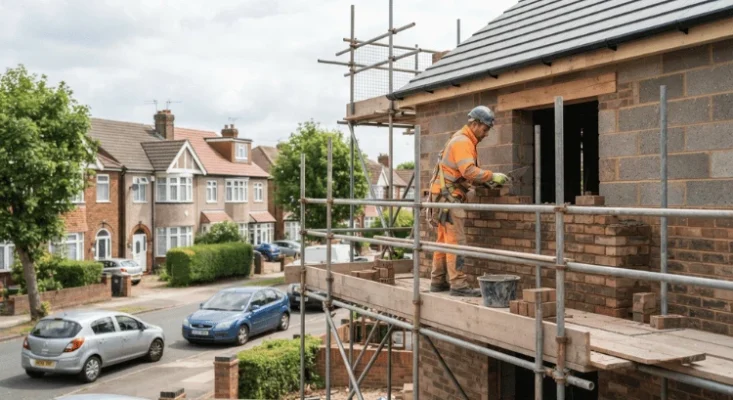
If the work is above ground level, we set up scaffolding or a tower. We usually cover nearby windows, sills, and paths to protect them from dust and mortar splashes. The extra time and materials required for these safety measures can also increase the project’s overall cost.
Raking Out the Old Mortar
The failed mortar is carefully removed to a consistent depth, usually around 15- 20 mm, without damaging the surrounding bricks. The joints are then brushed clean. This creates a solid, clean surface that helps the new mortar bond properly.
Applying the New Mortar
Lightly dampen the wall first so the new mortar doesn’t dry too quickly. Then mix the fresh mortar to the agreed spec and press it firmly into the joints in small, manageable sections. Working in smaller sections helps achieve a neat finish and ensures the mortar cures evenly.
Finishing the Joints
Once the mortar starts to firm up, it’s tooled into the chosen joint profile, whether that’s bucket handle, weatherstruck, or recessed, giving a neat, weathertight finish that matches the rest of your property. The correct joint profile also helps shed rainwater more effectively and protects the brickwork over time.
Clean-up and Aftercare
Any mortar smears are brushed off while still soft, and the fresh work is protected from rain or frost while it cures. A good roofing and building team will also walk the finished job with you before signing off, so you can address any minor issues before the project is complete.
Does Repointing Add Value Beyond Just the Cost?
If you’re comparing the cost of repointing a house with the potential cost of repairing damp or damaged brickwork later, repointing is usually the more cost-effective long-term investment.
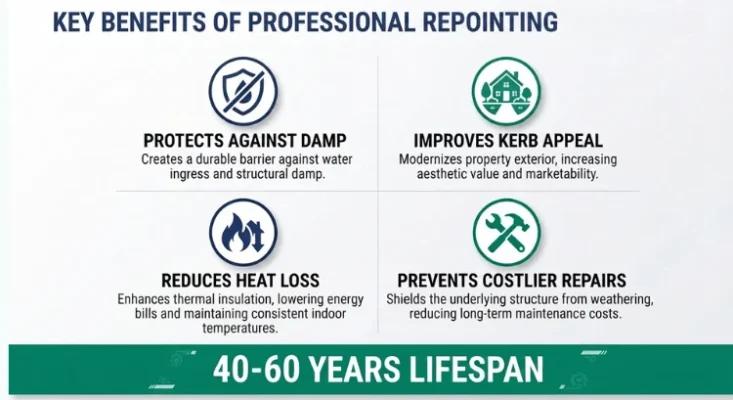
- Protects your property from damp and water ingress for decades
- Improves kerb appeal, which matters if you’re planning to sell
- Reduces draughts and heat loss by sealing up gaps in the brickwork
- Can prevent far costlier structural repairs down the line
Done properly, repointing typically lasts 40 to 60 years, so it’s one of those jobs that pays for itself many times over. As a trusted roofing company in Ashford, we’ve helped homeowners across the area protect their properties by repairing failing mortar joints before moisture causes more extensive damage to the brickwork.
Conclusion
Overall, repointing costs in the UK generally range from £25 to £90 per m², while a typical house repointing project costs between £2,000 and £9,000, depending on the property’s size, access requirements, and the mortar used. Older homes often require lime mortar, which costs more but helps protect traditional brickwork. If you’re unsure about your walls’ condition, a professional inspection is the best way to get an accurate quote and avoid unnecessary repairs.
Ready For A Free Repointing Quote?
Whether it’s a single wall or a full property repoint, Hibbs Roofing and Building Ltd covers repointing alongside damp proofing, fascias and guttering, flat roofs, and lead work, all backed by 25 years of experience across Ashford and Kent.
Frequently Asked Questions
Do I need planning permission to repoint my house?
No, like-for-like repointing counts as routine maintenance. For listed or conservation area properties, check with the local planning team first.
Can repointing be done in winter?
No, ideally not in freezing conditions, as frost stops the mortar from curing properly. Most teams time the job around milder weather instead.
Will repointing fix damp inside my house?
Yes, if the damp is caused by water entering through failed mortar joints. It won’t help with rising damp or condensation, so you need to confirm the cause first.
Does home insurance cover repointing?
No, not usually, since it’s considered routine maintenance rather than accidental damage. Some policies may contribute if a storm caused the mortar failure.
Is repointing noisy?
Yes, especially during the raking-out stage if a grinder is used. Most jobs stick to standard daytime hours to limit disruption.

Pingback: Best Mix for Repointing: Lime Mortar vs Cement Mortar