Look across the roofs of most Kent towns and you will see slate, tile and grey felt. Now picture a garage roof covered in pink and green sedum, with bees working it in late summer. That is the idea behind green roofs, and more UK homeowners are asking about them.
This guide covers the essentials in one go: what they are, how they work, what they cost, what the rules say and how to look after one
What Are Green Roofs?
A green roof is a roof partly or fully covered in vegetation, also called a living roof. The plants grow in a thin layer of growing medium laid over a waterproof system. Some people call it a grass roof, but most UK versions use sedum, wildflowers, and herbs rather than lawn.
How a green roof differs from a standard flat roof
A normal flat roof leaves its waterproof membrane exposed to sun, frost and rain. A green roof adds layers on top of that membrane, which protects the surface but also means the waterproofing beneath has to be right from day one.
How Green Roofs Work: The Layers Underneath
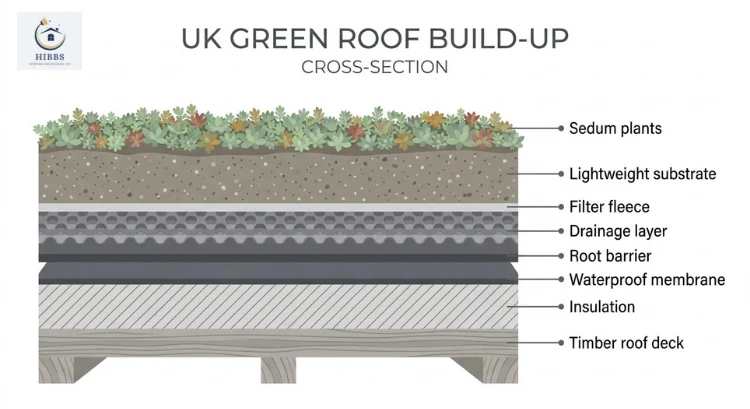
Every green roof system is built in layers. From the bottom up, the green roof build-up looks like this:
- Roof deck: the structure that carries everything above it
- Insulation: part of the roof build where the design includes it
- Waterproof membrane: the layer that keeps water out of the building
- Root barrier: stops roots reaching the membrane
- Drainage layer: carries excess water to the outlets
- Filter layer: keeps fine material out of the drainage
- Substrate: a lightweight growing medium, not garden soil
- Plants: sedum, wildflowers or a mix
Rain soaks into the plants and substrate first, then drains through the outlets. Because everything sits on top of the membrane, a fault in one of the green roof layers can stay hidden until water reaches the ceiling below.
Types of Green Roof
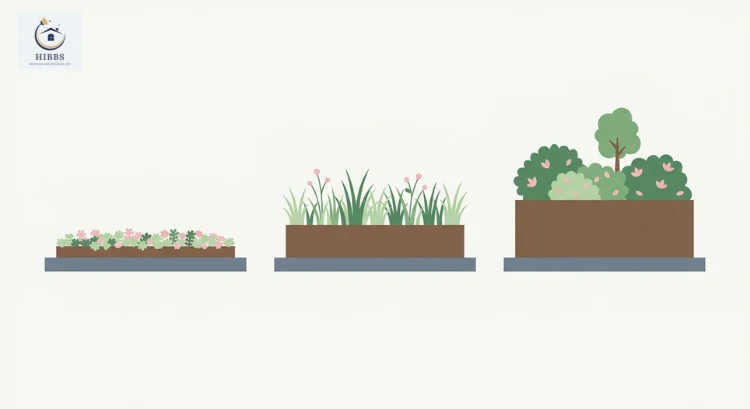
The main types differ in substrate depth, weight and upkeep. Extensive green roofs usually have 6 to 15cm of substrate. Semi-intensive roofs go deeper, and intensive roofs need 20cm or more.
Extensive and sedum roofs
This is the most common type. They are shallow, light, and low-maintenance, and they are not meant for regular foot traffic.
Sedum plants work well for green roofs because they store water in their leaves and cope with dry spells. Sedum living roofs also flower in late summer, which helps pollinators.
Biodiverse and wildflower roofs
These use a wider mix of plants to create habitat for insects, birds and other wildlife. Councils often ask for this type when a new building needs to support local biodiversity.
Semi-extensive and intensive roofs
Deeper substrate allows perennials, grasses and, on intensive roofs, shrubs and small trees. An intensive roof is really a roof garden. It is heavy, usually needs irrigation, and requires a structural engineer’s input.
Biosolar roofs
A biosolar roof puts solar panels above a green roof. The plants help keep the panels cooler, which improves efficiency.
Green Roof Benefits: What Is Proven and What Is Overstated
Green roofs offer real benefits, but a few get oversold. Start with the ones that have solid backing:
- Rainwater control: plants and substrate hold some rain and release it slowly. This eases pressure on drains and supports SuDS (sustainable drainage).
- Wildlife: even a small roof gives bees, butterflies and birds somewhere to feed.
- Cooler surroundings: plants cool the air as they release moisture, helping reduce the urban heat island effect in built-up areas.
- Longer membrane life: an exposed membrane takes the full force of UV and temperature swings. The green layers soften both.
- Less noise: the substrate and plants absorb sound that hard roof surfaces reflect.
Councils value these green roof advantages mostly for drainage and wildlife, which is why some expect them on new developments.
The honest bit on energy savings
Many guides promise lower bills. The truth is more careful. A green roof can reduce summer heat entering a building, especially one with poor insulation. It does not replace insulation, and savings vary from roof to roof. Keep that in mind when weighing the pros of green roofs against the cost.
Is Your Roof Suitable for a Green Roof?
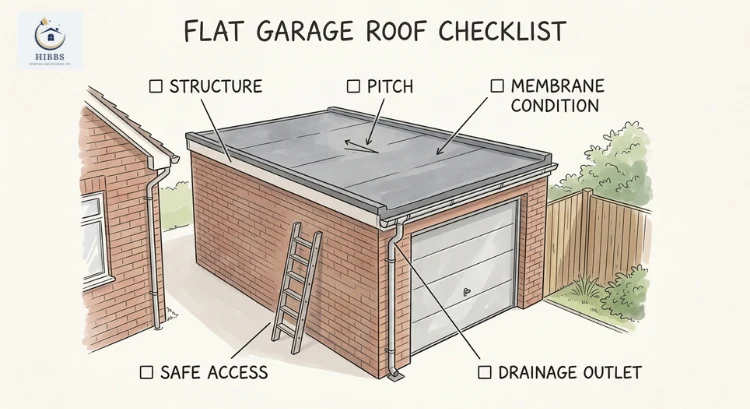
This is where a roofer’s eye matters. A green flat roof on a garage, extension or outbuilding is usually the easiest place to start. Check these before you commit:
- Structure: even a lightweight extensive system adds real weight once it is fully saturated. Have the structure checked before you go further.
- Pitch: flat and low-pitch roofs are simplest. Steeper roofs need extra fixing and edge detailing.
- Waterproofing: if the membrane is leaking or near the end of its life, repair or replace it first. Planting over a failing roof is a costly mistake.
- Falls and drainage: standing water rots roofs and kills plants, so the slope and outlets must work.
- Access: materials arrive in bulk, and you need safe access for upkeep afterwards.
How Much Do Green Roofs Cost in the UK?
Prices vary between UK cost guides because systems, access and structural work differ so much. Treat these as rough 2026 guide figures, not quotes:
- Extensive or sedum roofs: roughly £50 to £100 per m², with an average of about £75
- Semi-intensive roofs: about £80 to £150 per m²
- Intensive roofs: roughly £60 to £200 per m², with an average of about £130
Across all types, most projects land between £75 and £130 per m².
So the sedum roof cost per m2 depends heavily on the system you choose. For example, a flat green roof on a 16 m² garage at £100 per m² costs about £1,600 before extras. At the lower £75 average, the same roof comes to about £1,200. Prices usually exclude VAT.
Thinking about a green roof?
A survey is the sensible first step, because it shows what your roof can carry before you spend anything on plants.
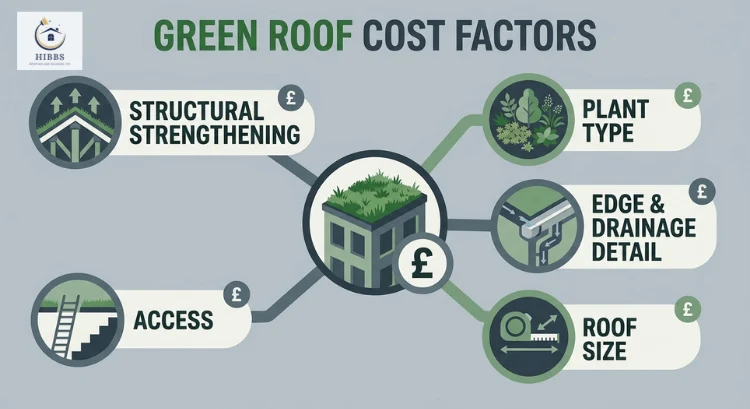
The green roof cost rises with:
- Strengthening a roof deck that cannot carry the extra weight
- Awkward access for pallets of substrate and plants
- Pre-grown sedum instead of plug planting
- Detailed edges, outlets and irrigation
- Very small roofs, which cost more per m² than large ones
Running costs are usually small and mostly cover inspections, weeding and the occasional feed.
Planning Permission, Building Regulations and BNG
Planning permission
On a house, you can often fit a green roof under permitted development rights for roof alterations, provided it doesn’t protrude more than 150mm beyond the original roof plane or rise above the roof’s highest point. Flats don’t have these rights, and Article 4 directions or earlier conditions can remove them. Listed buildings need listed building consent, and conservation areas need extra care. For extensions and new builds, councils often attach conditions for planting and maintenance. Check with your local planning authority first. The Planning Portal’s roof guidance is a good place to start.
Building regulations
A green roof can need building control approval, especially if it involves structural work, covers more than half the roof, or adds 15% or more to its weight. On a dwelling, renovating more than half a roof can also trigger Part L insulation upgrades where feasible and cost-effective. Check which edition of Approved Document L applies.
Biodiversity Net Gain
In England, most new developments must deliver at least a 10% Biodiversity Net Gain, and a biodiverse green roof can contribute onsite. Householder extensions, permitted development and, from 6 August 2026, many sites of 0.2 hectares or less are exempt. The government’s BNG guidance explains the details.
Standards worth knowing
No British Standard covers green roof design and fitting. The Green Roof Organisation fills that gap with its GRO Code of Best Practice. A separate standard, BS 8616, covers testing green roof substrates.
Green Roof Maintenance: A Year-Round Checklist
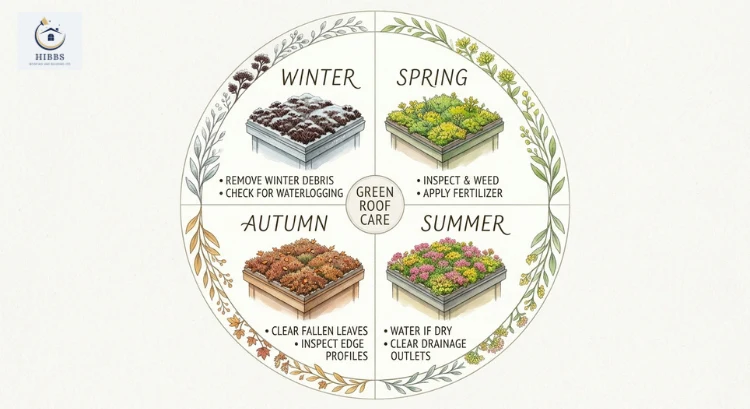
Green roof maintenance is light, but it is never zero. Here is a simple routine:
- Spring: look for winter damage, pull out weeds and tree seedlings, and feed sedum if needed.
- Summer: water a new roof and any roof in a long dry spell, and check for bare patches.
- Autumn: clear leaves from gutters and outlets, and cut back plants creeping towards edges.
- Winter: check drainage after heavy rain and keep off frozen planting.
At a minimum, inspect the roof twice a year. Clear gutters protect the roof edge too, so it helps to know how often gutters should be cleaned.
The first year
A new roof needs the most attention. A semi-extensive roof can take 12 to 24 months to establish, with regular watering, feeding, and replanting patches where it fails.
Green Roofs with Hibbs Roofing
Green roofs sit within the flat roofing work we do at Hibbs Roofing and Building Ltd. That makes sense, because the plants are only as good as the roof underneath them. Every job starts with the roof itself, where we check the deck, the falls, and the outlets before we talk about planting and price.
We work on garage and extension roofs in Ashford, Charing and Wye, and across Kent. If your roof is a good candidate, we can talk through a green finish as another option.
Green Roof FAQs
How long do green roofs last?
A green roof lasts about as long as the waterproofing beneath it. EPDM and GRP flat roofs can reach 30 to 50 years when the deck and falls are right. The plants are easier to renew than the membrane, so patching bare areas is routine.
Can you make a green roof yourself?
If you want to know how to make a green roof, small shed and outbuilding roofs are the usual DIY projects. They use a membrane, drainage layer, substrate and sedum matting or plugs. First, confirm the structure can carry the weight. For a heated building, leave the waterproofing to a roofer.
What plants grow on a green roof besides sedum?
Extensive roofs also use Sempervivum (houseleeks) and moss. Deeper semi-extensive roofs suit dry-habitat perennials and grasses such as Achillea, Dianthus and Stipa tenuissima, plus small bulbs like Muscari.
Are green roofs a fire risk?
It depends on the system. Building Regulations guidance sets no specific test for green roofs and points to government research on their fire performance. The Green Roof Organisation also publishes its own fire guidance. Ask for the system’s fire test evidence before you choose.
What is the difference between a green roof and a blue roof?
A green roof grows plants. A blue roof stores rainwater temporarily and releases it slowly to ease pressure on drains. You can combine the two, with a planted finish over water storage, as a flood-management option on larger buildings.
