
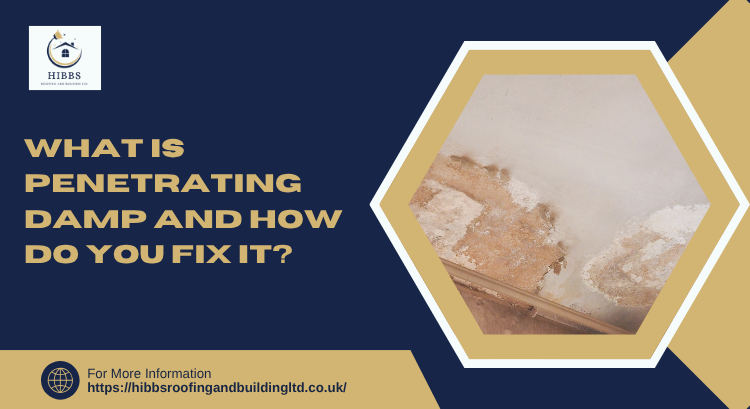
- Penetrating damp is water coming in from outside. Rain gets through walls, roofs, chimneys, windows or doors and shows up inside as damp patches.
- It gets worse after rain. That is the main way to tell it from rising damp (which comes up from the ground) and condensation (which comes from indoor humidity).
- The usual causes are simple. Broken gutters, cracked pointing or render, roof defects and high ground levels cause most cases.
- Fix the source, not the stain. Repair the entry point first, let the wall dry, then redecorate. Painting over damp only hides it.
- Don’t wait. Untreated damp leads to mould, rotting timber and damaged plaster.
How can you tell if you have penetrating damp?
Look for these signs of penetrating damp:
- Damp patches on walls or ceilings that appear or grow after rain and dry out in dry weather
- Brown or yellow stains, sometimes with a darker edge
- Peeling paint, bubbling wallpaper or crumbling plaster
- Mould in the affected area
- A musty smell in the room
- Patches on upper floors, ceilings, chimney breasts or around windows (rising damp rarely climbs that high)
Penetrating damp, rising damp and condensation compared:
| Feature | Penetrating Damp | Rising Damp | Condensation |
|---|---|---|---|
| Source | Rainwater entering through walls, roofs, chimneys, windows or structural defects | Ground moisture travelling up through masonry | Moisture in the air settling on cold surfaces |
| Where It Appears | Anywhere in the property, including upper floors and ceilings | Lower sections of ground-floor walls, usually up to 1 metre | Windows, corners, behind furniture and poorly ventilated rooms |
| Typical Pattern | Localised damp patches that worsen after rain | Consistent tide marks and salt deposits near floor level | Water droplets, surface dampness and black mould growth |
| When It Occurs | Often linked to wet weather and rainfall | Usually present throughout the year | Most noticeable during colder months and in kitchens or bathrooms |
What causes penetrating damp?
In Ashford, Kent homes, we most often find:
- Blocked, leaking or broken gutters and downpipes. Overflowing water runs down the wall face and soaks in.
- Failing pointing or cracked render. Gaps in the mortar and cracks in render let rain through.
- Roof defects. Slipped or broken tiles, failed flashings and cracked chimney flaunching all leak.
- Ground levels higher than the damp-proof course (DPC). Raised patios or soil bridge the barrier and let water in.
- Faulty window and door seals. Cracked frames, failed sealant and badly fitted sills let water into the wall.
- Cavity wall problems. Mortar droppings or debris can bridge the cavity and carry water across to the inner wall.
- Porous brickwork. Older or soft bricks can absorb a lot of wind-driven rain.
During a recent damp investigation in Ashford, a homeowner contacted us about a persistent damp patch on a bedroom wall. They had previously been advised that it was rising damp, but our inspection revealed a different cause. After checking the roof and chimney, we discovered that cracked chimney flashing was allowing rainwater to enter the property and travel down the internal wall. We repaired the flashing and chimney flaunching, allowed the affected area to dry thoroughly, and then carried out the necessary internal repairs. Since the work was completed, the damp problem has not returned.
Why is it important to diagnose it correctly?
The treatment is completely different for each type of damp. A damp-proof injection will do nothing for a leaking gutter. A moisture meter alone isn’t enough either, as it can read high for reasons that have nothing to do with rain.
A proper survey checks the whole picture: the roof, gutters, pointing, render, ground levels and the history of the patch. We inspect the outside of the property first, then take moisture readings inside and trace the damp back to where the water is getting in. We repair the cause, not just the visible damage.
Think you may have penetrating damp? → Book a damp survey today.
How to fix penetrating damp?
Follow this order:
Step 1: Find and stop the water source.
This is the most important step. Nothing else will last until the entry point is fixed.
Step 2: Repair the structure.
Depending on the cause, this may mean:
- Clearing, repairing or replacing gutters and downpipes
- Repointing damaged mortar with a suitable mix. Old soft brick needs a softer, breathable mortar, because hard cement can trap moisture and damage the brick
- Repairing or replacing cracked render
- Fixing roof tiles, flashings and chimney defects
- Lowering external ground levels or clearing the DPC
- Resealing or replacing windows, doors and sills
- Clearing blocked cavities
Step 3: Protect the wall where needed.
On some walls, a breathable, water-repellent masonry treatment can reduce absorption. Avoid non-breathable paints or sealants on solid walls, as they trap moisture inside.
Step 4: Let the wall dry out.
This takes time, often weeks or months. Good ventilation helps.
Step 5: Replaster and redecorate only once the wall is dry.
Salt-contaminated plaster may need to be removed and replaced with a suitable system. Redecorating too early means the damp will come back through the new finish.
Can you fix penetrating damp yourself?
Simple jobs are fine: clearing gutters, trimming back plants, and checking for visible cracks.
Call a professional if:
- The cause isn’t obvious
- The work involves roofs or high-level access
- The damp keeps coming back
- You see widespread mould or damaged timber
- You’re buying or selling and need a clear report
How we help in Ashford
Our team provides damp proofing services in Ashford covering surveys, diagnosis and repair. With over 25 years of experience in roofing and building, we know how water gets into properties and how to stop it for good. Because we are roofers and builders as well as damp specialists, we can fix the actual cause of a leak, whether that is the roof, the brickwork or the guttering.
Stop Damp Before It Causes Costly Damage
If your damp patch keeps returning, we’ll find the source and explain the most effective solution.
Call 07728 304281 Book A Damp SurveyConclusion
Penetrating damp is a warning sign that water is entering your property where it should not. The longer the issue remains unresolved, the greater the risk of structural damage, timber decay, damaged plaster and mould growth.
Early diagnosis is key. By identifying and repairing the source of water ingress quickly, homeowners can avoid more extensive and costly repairs in the future.
FAQs
Is penetrating damp serious?
It can be. Left alone, it causes mould, rotting timber, damaged plaster and higher heating costs. Prolonged damp and mould can also affect health, particularly breathing.
How long does penetrating damp take to dry?
Once the leak is fixed, walls usually need weeks to months to dry fully, depending on thickness and ventilation.
Does home insurance cover penetrating damp?
Often not. Many policies exclude gradual damage and poor maintenance. Check your policy wording.
Will a dehumidifier fix penetrating damp?
It can help dry the air, but it won’t stop water entering. The leak has to be repaired.
Can penetrating damp come back?
Yes, if the source wasn’t properly fixed or maintenance (gutters, pointing) is neglected.
