
The clearest warning signs your roof needs repair are missing or slipped tiles, a sagging roofline, water stains on ceilings, damp or daylight in the loft, debris in the gutters, moss build-up, damaged or corroded flashing, and an unexplained rise in energy bills. Spotting any of these early on usually means a straightforward repair rather than a costly replacement.
If you’ve noticed something off about your roof lately, whether it’s a damp patch, a missing tile, or a gutter full of grit, you’re probably wondering whether it’s serious or whether it can wait. Most roofs don’t fail overnight; they send out warning signs first, and this guide walks through the eight most common ones, what causes each, and how to tell a quick fix from something more serious. If you’d rather skip straight to a professional opinion, experienced roofers in Ashford can usually tell within a single visit.
Why Roof Damage Happens in Ashford
Ashford sits in a part of Kent that gets a genuine mix of weather through the year. Wind coming off the Channel, heavy autumn rain, and the odd hard frost all take their toll on a roof over time, and the town’s older housing stock adds another layer to the picture. Many of Ashford’s streets are lined with Victorian and Edwardian terraces, with roofs repaired and patched up gradually over decades rather than replaced outright.
Newer estates aren’t immune either. Even a roof fitted in the last twenty years will start showing wear from constant exposure to wind-driven rain, UV, and the freeze-thaw cycle that’s become more common in recent British winters. None of this means every roof in the area is in trouble. It just means it’s worth knowing what to look for before a minor issue turns into a costly one.
8 Warning Signs Your Roof Needs Repair
You can spot most of these signs from ground level or with a careful look around the loft. None of them requires you to get up on the roof yourself, and we’d strongly advise against trying.
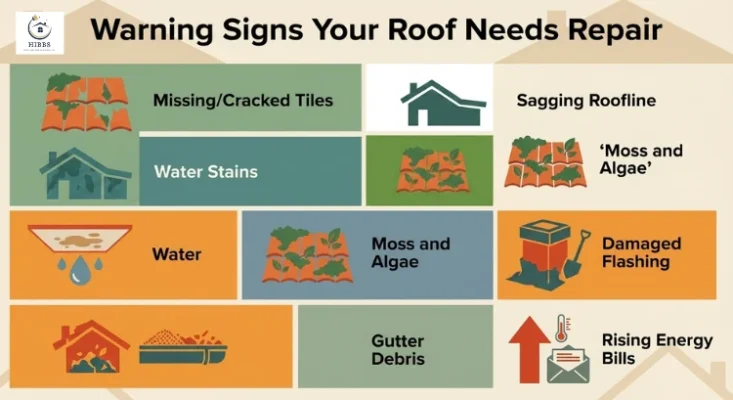
1. Missing, Slipped or Cracked Tiles
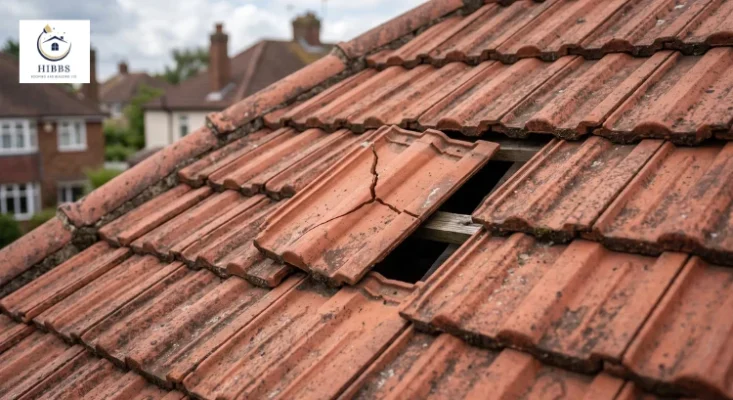
This is usually the easiest sign to catch because it’s visible from the garden or the street. A single slipped tile isn’t an emergency, but it does need sorting quickly, since it exposes the felt and battens underneath to weather they weren’t designed to handle directly.
Look out for:
- Tiles sitting unevenly or visibly out of line with the rest of the roof
- Cracks running across the tile surface
- Bare patches where a tile has come away completely
- Broken tile fragments in the garden or on the ground below
2. Sagging or Dipping Roofline
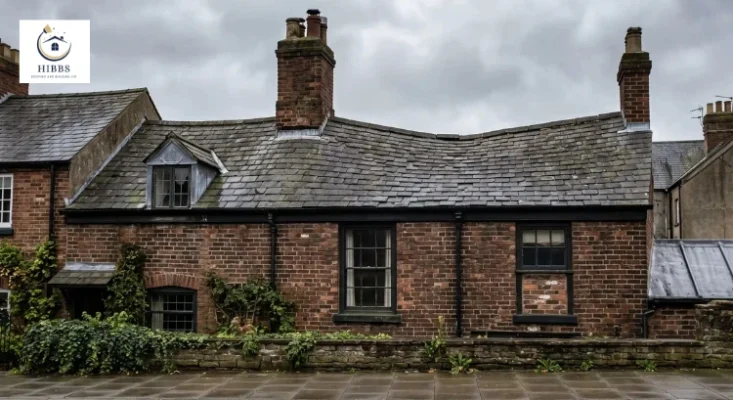
A roof should run in a straight, even line from end to end. Sagging usually indicates weakened timber beneath, often caused by water getting in unnoticed over a long period, and it’s one of the few signs on this list that genuinely shouldn’t wait.
Look out for:
- A dip or wave visible when viewing the roof from across the street
- One section sitting noticeably lower than the rest
- A ridge line that no longer runs straight
- Doors or windows below the roofline that have started sticking
3. Water Stains on Ceilings or Walls
Brown or yellow rings on a ceiling are one of the clearest indicators of a leaking roof. The tricky part is that the stain rarely sits directly below the source, since water tends to travel along rafters and battens before it finds a way through.
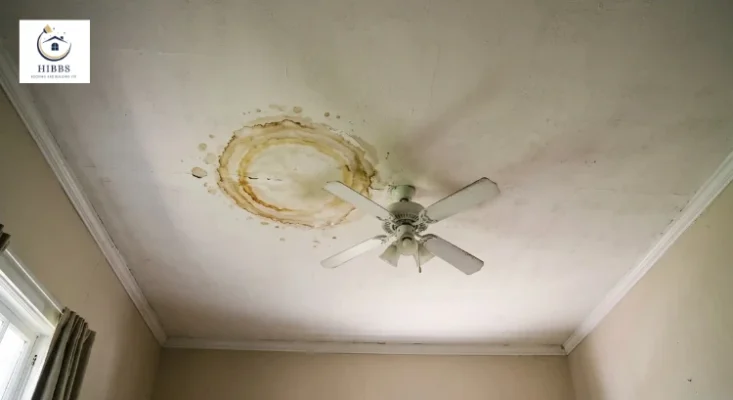
Look out for:
- Brown or yellow rings on ceilings, especially after rain
- Damp patches on upper-floor walls
- Peeling paint or bubbling plaster near the ceiling
- Stains that reappear after cleaning or repainting
4. Damp or Daylight in the Loft
A visit to the loft tells you more about your roof’s condition than a look from the garden ever will. Go up without switching on the light. If you can see daylight coming through anywhere, that’s one of the clearest signs of a gap in the roof. Loft damp doesn’t always show up inside the house straight away, which is why it’s worth checking directly rather than waiting for a ceiling stain. If damp has already taken hold, our damp-proofing team regularly deals with this kind of moisture getting in
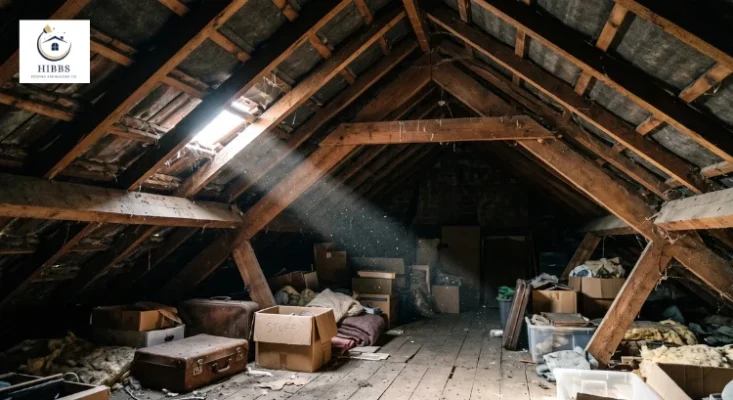
Look out for:
- Visible daylight coming through the roof deck
- A draught in the loft where there shouldn’t be one
- Dark staining or discolouration on timbers
- A musty or damp smell when you go up
We had a call-out on a terrace off Beaver Road last winter. Homeowner thought it was just a slipped tile, but the loft check showed the felt had gone underneath as well. Caught early enough that it was a repair, not a full re-roof. That’s the pattern we see most in this part of Ashford: small thing on the surface, worth checking properly before it becomes a bigger one.
Tony Hibbs
5. Granules or Debris in Your Gutters
Next time you’re clearing the gutters, take a proper look at what comes out. On felt or bitumen roofing, granule loss usually means the protective top layer is wearing thin. On tiled roofs, fragments often indicate deteriorating ridge tiles or flashing. A blocked or damaged gutter system can also make things worse, and our fascia, soffits and guttering services in Ashford cover exactly this.
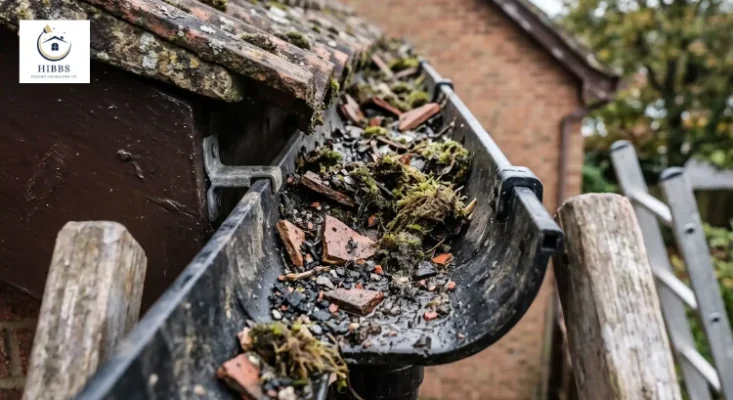
Look out for:
- Small dark granules collecting in the guttering
- Grit or sandy residue after clearing leaves
- Fragments of tile, slate or cement
- Increasingly frequent gutter blockages
6. Moss and Algae Build-Up
A bit of moss on a roof isn’t automatically a problem, and light coverage on shaded slopes is mostly cosmetic. Thick, spreading moss is different, since it holds moisture against the tile surface for longer and can lift tiles as roots work into the gaps.
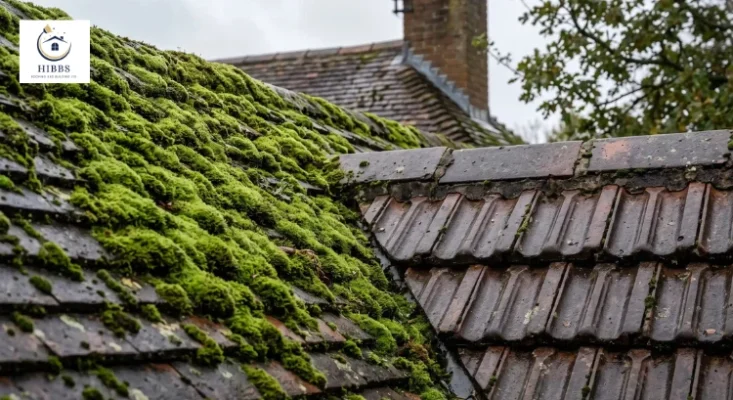
Look out for:
- Thick moss spreading across a slope, particularly north-facing
- Green or black streaking on tiles
- Moss growth increasing year on year rather than staying static
- Tiles that feel slightly lifted where moss has taken hold
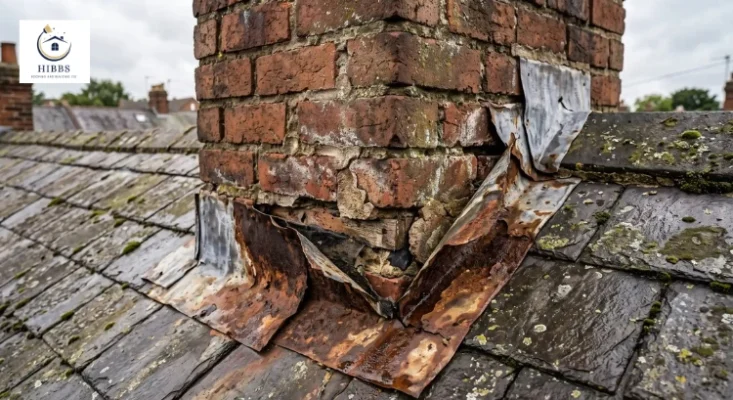
7. Damaged or Corroded Flashing
Flashing is the metal strip fitted around chimneys, skylights and roof valleys to keep water out of the joins where two surfaces meet. It’s one of the most common failure points on any roof because it constantly flexes with temperature changes and bears the brunt of wind-driven rain.
Look out for:
- Rust or discolouration on metal flashing
- Flashing that’s visibly lifted or peeling away
- Missing sections around a chimney or vent
- Water marks appearing on a chimney breast inside the house
8. Rising Energy Bills
This one catches people out because it doesn’t look like a roofing problem at first glance. Gaps, damaged insulation, or poor loft ventilation can let heat escape more easily, so your heating system has to work harder to keep the house at the same temperature.
Look out for:
- Heating bills increasing without an obvious cause
- Rooms below the roof feeling colder than the rest of the house
- Heating system running longer to reach the same temperature
- Draughts noticeable in upper rooms or the loft hatch
Repair Or Replace? How To Decide
Spotting one or two of the signs above usually points towards a repair rather than a full replacement. A slipped tile, a section of damaged flashing, or a patch of moss can typically be dealt with on its own, without disturbing the rest of the roof.
| Factor | What to Look For | Repair or Replace? |
|---|---|---|
| Roof age | Tiled roofs: under 50 years. Felt/low-cost coverings: under 15–20 years | Repair |
| Roof age | Tiled roofs: approaching or past 50 years. Felt: past 15–20 years | Replace |
| Spread of damage | A single fault in one area | Repair |
| Spread of damage | Multiple issues across different parts of the roof | Replace |
| Repeat repairs | First time calling someone out for this section | Repair |
| Repeat repairs | Called out for the same section more than once recently | Replace |
| Cost against value | Repairs to date are under a quarter of full replacement cost | Repair |
| Cost against value | Repairs to date exceed a quarter of full replacement cost | Replace |
A few factors tend to push things towards replacement instead:
- Roof age
Most tiled roofs are built to last 50 years or more, but felt and some lower-cost coverings have a shorter working life, often 15 to 20 years. If your roof is approaching or past its expected lifespan, repairs become less cost-effective over time.
- Spread of damage
A single fault in one area is usually a repair. Multiple issues across different parts of the roof at once often mean the whole covering is nearing the end of its life.
- Repeat repairs
If you’ve called someone out for the same section more than once in a short time, that usually means the underlying problem hasn’t been fixed.
- Cost against value
As a rough guide, if repairs over the past few years add up to more than a quarter of a full replacement’s cost, it’s usually time to stop patching. Our roof repair cost guide breaks down what to expect.
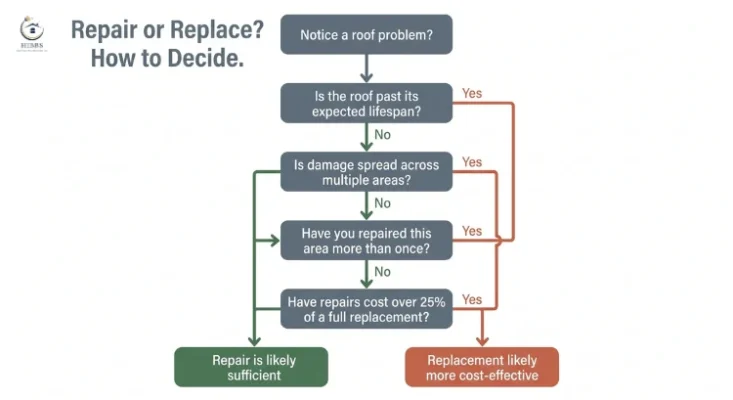
None of these is a hard rule on their own. The clearest way to know for certain is a proper inspection, ideally one that includes the loft as well as the roof surface, since many serious issues aren’t visible from the ground.
Is Your Ashford Roof at Higher Risk?
Property type plays a bigger role in roof condition than most homeowners expect. Ashford’s Victorian and Edwardian terraces were often built with traditional roofing materials such as slate and clay tile, and were repaired and patched over many decades, sometimes with materials that don’t quite match the original specification. That patchwork history can make these roofs more prone to the localised failures covered above, particularly around flashing and older leadwork.
If your property sits within a conservation area, it’s also worth checking with the local planning authority before carrying out repairs that change the roof’s appearance, as some areas restrict the materials permitted on street-facing slopes. The Planning Portal is a useful starting point for checking whether you need permission before work begins.
Newer estates around Ashford face different pressures. These roofs are generally newer and built to current standards, but constant exposure to wind and rain still causes gradual wear, particularly around ridge tiles, valleys, and gutter lines, where water tends to concentrate during heavy weather.
When To Call A Professional Roofer
You can safely check some of the signs above from the ground or the loft. Actually getting up on the roof is a different matter. Roofing work at height carries real risk, and even an experienced homeowner can misjudge a slope or a weak section of covering.
As a general rule, call a professional if you notice:
- Any sagging or dipping in the roofline
- Water actively coming through into the house
- Missing or damaged flashing around a chimney or vent
- Multiple signs from this list appearing at once
- Storm damage of any kind, even if it looks minor
A professional inspection typically covers both the roof surface and the loft, which gives a much fuller picture than a look from the garden. If you’re not sure who to trust, our guide on choosing a roofing company in Ashford covers what to check before you book anyone.
Get Expert Advice On Your Roof
Spotted signs of a problem? Hibbs Roofing and Building Ltd has repaired roofs across Ashford for over 25 years. Get honest advice on whether it’s a simple fix or something bigger.
Conclusion
Most roofs give plenty of warning before anything serious goes wrong. Missing tiles, a sagging line, water stains, loft damp, gutter debris, moss, damaged flashing, and unexplained energy bills are the eight signs worth watching, and catching any one of them early usually means a manageable repair rather than an expensive one.
Ashford’s mix of older terraces and newer estates each comes with their own pressures, but the same principle applies across the board: the sooner a problem is identified, the more options you have for dealing with it. When in doubt, an experienced local roofer can tell you exactly where you stand.
Frequently Asked Questions
How do I know if my roof needs repairing?
The clearest signs are a sagging roofline or water actively coming through, since those shouldn’t wait. Missing tiles, moss, gutter debris, and rising energy bills are also worth checking, and if you notice several at once, book an inspection rather than wait.
What are the signs of a roof leak?
The most common sign is a water stain or damp patch on a ceiling or wall, often appearing after rainfall. Musty smells, damp timber in the loft, and peeling paint near the ceiling are also worth checking, since the visible stain isn’t always directly below where the water is getting in.
Is it worth repairing an old roof, or should I replace it?
It depends on the roof’s age, the extent of the damage, and how often you’ve already needed repairs. A single fault on an otherwise sound roof is usually worth repairing. Multiple issues on a roof nearing the end of its expected lifespan often make replacement the more cost-effective option long-term.
How much does a roof repair cost in the UK?
Costs vary depending on the type and extent of the damage, but minor repairs, such as replacing a few tiles, typically start at a few hundred pounds, while more involved work, like flashing replacement or partial re-roofing, costs more. A written quote from a local roofer is the most accurate way to know what your specific repair will involve.
Does home insurance cover roof repairs?
It depends on the cause of the damage and your policy. Most UK home insurance covers roof damage caused by storms, falling trees or other sudden events, but general wear and tear from age is usually excluded. Check your policy documents or speak to your insurer directly before assuming a repair will be covered.
How long does a roof last in the UK?
It depends on the material. Slate and good quality clay tile can last 50 years or more with proper maintenance, while concrete tiles typically last 30 to 50 years. Felt and other low-cost coverings have a shorter lifespan, often 15 to 20 years. Local weather, ventilation, and how well the roof has been maintained all affect where a specific roof falls within that range.
How often should I get my roof inspected?
Most roofers recommend an inspection once a year, ideally in autumn before winter weather sets in, plus a check after any major storm. Older roofs, or ones that have already needed repairs, benefit from more frequent checks. A yearly inspection usually catches minor issues while they’re still cheap to fix.
Do I need planning permission to repair my roof in a conservation area?
Like-for-like repairs, such as replacing a broken tile with a matching one, usually don’t need permission. Changes that alter the roof’s appearance, such as switching materials or adding rooflights on a street-facing slope, often do. Rules vary by conservation area, so check with the local planning authority before starting work if your property falls within one.
How long does a roof repair take?
Minor repairs, such as replacing a few tiles or fixing a small section of flashing, are often finished within a day. More involved work, like repairing a sagging section or replacing damaged felt, can take two to three days depending on the scope and weather conditions. A roofer can give an accurate timeframe once they’ve seen the damage in person.
Can storm damage to my roof be claimed on insurance?
Most UK home insurance policies cover storm-related roof damage, as long as it’s sudden rather than the result of gradual wear. Photograph the damage and get a written report from a roofer before contacting your insurer, as this will help support your claim. Report it as soon as possible, as some policies have time limits on storm-damage claims.

Pingback: What Are Roof Shingles? Types, Costs & Benefits