
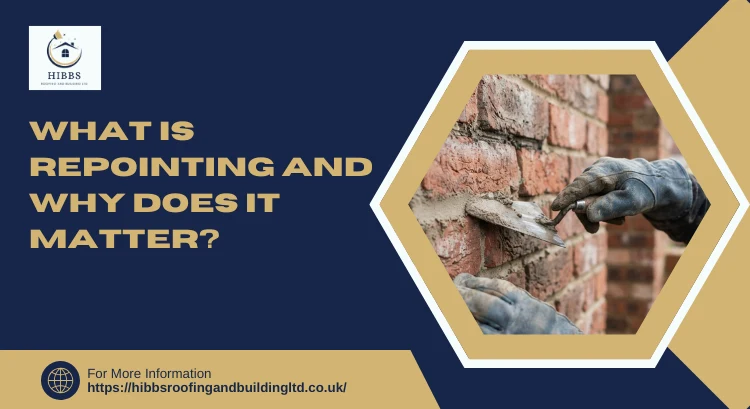
Repointing replaces worn-out mortar between bricks with fresh mortar, restoring a wall’s strength and weatherproofing. It matters because failing mortar lets water in, which leads to damp, structural weakening, and higher repair costs the longer it’s left. It helps with penetrating damp specifically, not rising damp or condensation, and when done properly, lime mortar can last 50 to 100 years, while cement mortar typically lasts 20 to 40 years.
This guide walks through what repointing involves, why it’s worth taking seriously rather than putting off, the signs that it’s time, and what a proper job looks like from start to finish. We’ll also cover cost, whether you can tackle it yourself, and how it connects to damp problems many homeowners assume are something else entirely.
What Is Repointing?
Mortar is designed to be the sacrificial part of a wall. Bricks are expensive and hard to replace, so mortar is built to wear down first, protecting the brick and giving you something straightforward to repair rather than facing a full rebuild.
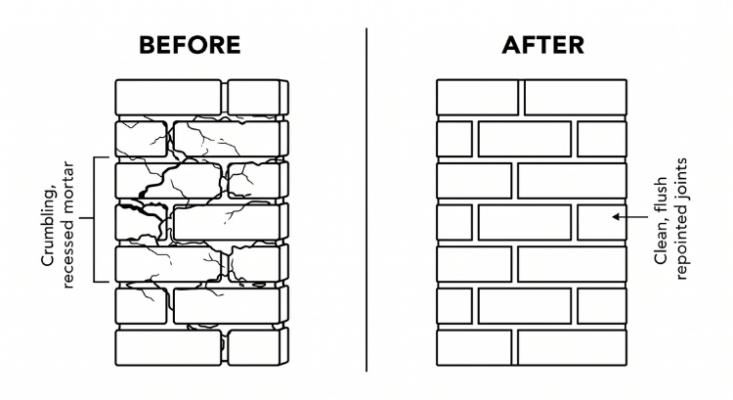
Repointing means:
- Removing the old, deteriorated mortar from the joints, usually by raking it out to a depth of roughly 12 to 19mm, or about twice the joint’s width
- Cleaning the joint of dust and debris
- Applying new mortar matched to the original in strength, colour, and composition
- Finishing the joint so it sheds water properly rather than trapping it
Done properly, repointing is close to invisible once finished; the wall looks sound again rather than “repaired.”
Why Does Repointing Matter?
Mortar joints do more work than most homeowners realise. They hold the wall together structurally, and they’re the first line of defence against water getting into the brickwork at all.
Left untreated, failing mortar leads to:
- Water ingress, since gaps and eroded joints give rain a direct route into the wall
- Structural weakening, as bricks lose the support that keeps them properly aligned and load-bearing
- Higher costs later, because a straightforward repointing job is far cheaper than dealing with damp damage, spalled brick faces, or a section of wall that needs rebuilding
- Reduced energy efficiency, since gaps in mortar let warm air escape and cold air in
Here’s the practical reality: for a typical two-storey home, failed pointing alone is rarely a structural emergency. Research from the Building Research Establishment shows that even badly recessed joints usually cost a wall about a third of its compressive strength, not anywhere near enough to bring it down. Taller buildings, or a wall that’s already cracking or visibly moving, are the exception, and genuinely need a proper structural assessment before any repointing starts.
Does Repointing Stop Damp?
This is one of the most misunderstood parts of the whole topic, and it’s worth getting right before spending any money.
Repointing helps with penetrating damp specifically, the kind that gets in through a defect in the wall’s structure. If failed mortar joints are letting wind-driven rain soak into the brickwork faster than it can dry out, repointing genuinely fixes that.
What it won’t fix:
- Rising damp, which travels up through a wall from the ground and has nothing to do with the mortar joints higher up
- Condensation, which forms from moisture in indoor air meeting a cold surface
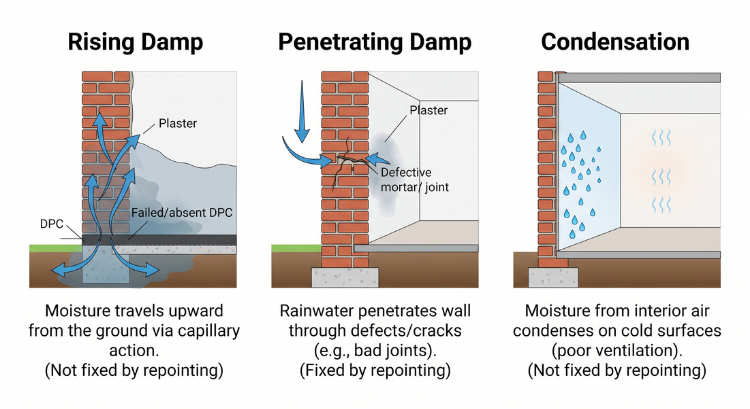 Here’s a quick way to tell if mortar is actually your problem. If damp patches get worse after rain and dry out again in between, especially on a wall that takes the brunt of the weather, failed pointing is a reasonable suspect. If the damp instead sits in a low, steady band near the skirting boards no matter the weather, or shows up as mould in cold corners and behind furniture, it’s not the mortar, and repointing won’t fix it. If you’re not sure which pattern matches what you’re seeing, our guide on the signs of damp in older homes walks through how to tell them apart.
Signs Your House Needs Repointing
A few reliable indicators that it’s time to get pointing looked at:
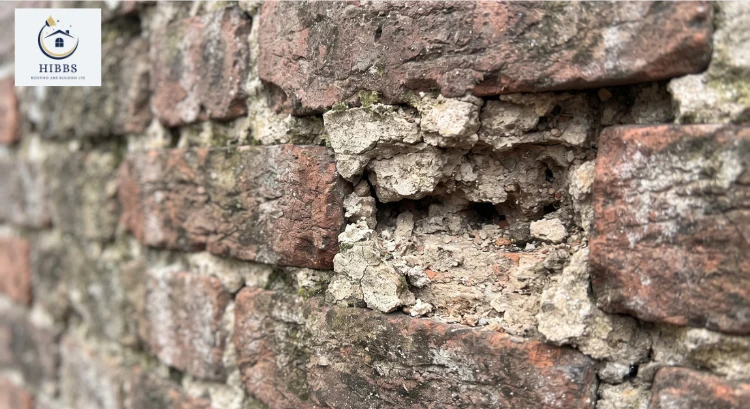
- Mortar that’s crumbling, powdery, or falls away when touched
- Visible gaps or deep recesses between bricks
- White, chalky staining on the brick surface, known as efflorescence
- Damp patches appearing on internal walls, particularly after rain
- Loose or slightly shifting bricks
- Small plants, moss, or weeds growing directly from the mortar joints, which signals gaps wide enough to trap moisture and let roots take hold.
A simple self-test: try scratching the mortar with a key or a flathead screwdriver. If it comes away easily or you can see a noticeable gap behind the brick face, that’s a fairly clear sign the joint has failed, though most roofers in Ashford would rather take a quick look themselves than have you guessing from a scratch test alone.
Does Old Mortar Always Need Replacing?
Not necessarily. Mortar that looks weathered, uneven, or visually imperfect isn’t automatically failing; much older mortar keeps doing its job perfectly well long after it stops looking new. The Society for the Protection of Ancient Buildings (SPAB) recommends leaving sound historic mortar undisturbed rather than repointing purely for a uniform appearance, since removing good original material can do more harm than the weathering it’s replacing.
The point isn’t to make every joint look brand new. It’s to repair the sections that have genuinely failed, while leaving the rest alone.
What Causes Brickwork To Need Repointing?
Mortar doesn’t fail for one single reason. The usual culprits:
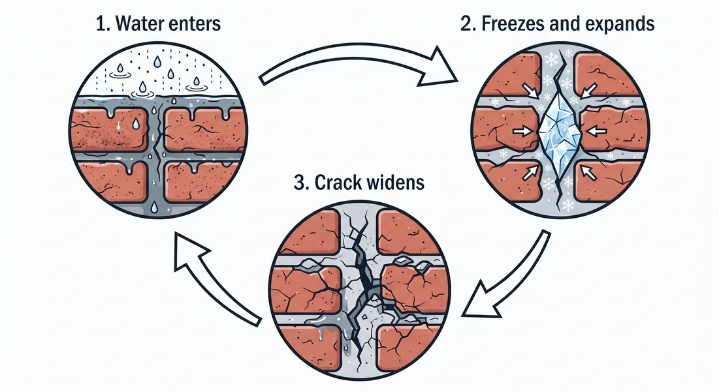
- Weather, particularly repeated freeze-thaw cycles, where water trapped in small cracks freezes, expands, and widens the damage
- Age, since even well-built mortar has a working life before it needs attention
- A previous repair using the wrong mortar mix, which is more common and more damaging than most homeowners expect
That last point deserves its own explanation. Older properties, generally anything pre-1920s, were built with lime mortar, which is deliberately softer and more breathable than the brick around it. This lets moisture pass through the joints and evaporate naturally. Modern cement-based mortar works the opposite way: it’s harder and largely impermeable. On an older wall, it stops moisture from escaping through the joints, forcing it through the brick faces instead. Over time, this shows up as crumbling brick, salt staining, and damp that seems to persist no matter what you do to the wall.
One Honest Caveat Worth Knowing
If a wall is genuinely cracking or moving, repointing on its own won’t solve it, and it can sometimes make the damage look worse once the new, harder joint highlights movement in the surrounding brick. In that case, address the cracking first, then repointing as part of the wider repair.
How Much Does Repointing Cost?
Cost depends on the job size, the mortar type required, and how easy the wall is to access. Lime mortar work generally costs more than standard cement repointing because it requires more careful matching and application, and jobs requiring scaffolding cost more than ground-level work.
For a full breakdown by property size and treatment type, our dedicated guide on how much repointing costs in the UK covers the figures in detail.
Can You Repoint Brickwork Yourself?
Small, low-level jobs are within reach of a confident DIYer. Anything structural, visible from the street, or on a period property is different.
Safety Precautions Before You Start Repointing
- Never work from a ladder when repointing at height; only from a properly erected scaffold platform.
- Wear safety glasses, a dust mask or respirator, and gloves
- Avoid disc saws or angle grinders for removing old mortar unless you’re experienced, since they’re easy to lose control of and can damage the brick
Tools Needed for Repointing
Step-by-Step Guide To Repointing Brickwork
- Rake out the old mortar to a depth of roughly twice the joint’s width, taking care not to damage the surrounding brick edges.
- Brush away loose dust and debris, then dampen the wall lightly before applying new mortar.
- Mix the new mortar to match the original as closely as possible
- Apply the mortar with a pointing trowel, working from the top of the wall downward
- Finish the joint to match the existing style before the mortar sets too hard
- Avoid repointing in frost or very hot, dry conditions, both of which affect how well the mortar cures
For anything beyond a small, low-level patch, or a period property where matching the original lime mortar matters, hiring a professional usually saves money in the long run rather than risking a redo.
“If you’re planning to repoint brickwork, check the detailed guide on how to repoint brickwork from start to finish.”
What Does Professional Repointing Involve?
Our process at Hibbs Roofing and Building Ltd follows a consistent approach: a full inspection of the wall, identifying the correct mortar match for the property’s age and construction, careful raking out to the right depth, and a finish that sheds water properly rather than trapping i.t
We carry out repointing in Ashford on everything from single walls to full period properties, matching the mortar to the building rather than applying a one-size-fits-all mix.
How Long Does Repointing Last?
Properly executed repointing lasts several decades, but the exact figure depends heavily on the mortar used. Lime mortar typically lasts 50 to 100 years thanks to its flexibility and self-healing properties, while cement mortar tends to last 20 to 40 years, sometimes less on older brick where it can cause damage that shortens the wall’s life. For the full breakdown of which mortar suits which property, see our guide on lime mortar vs cement mortar. Exposure makes a real difference too: south- and west-facing walls and anything close to the coast tend to weather faster than more sheltered elevations
A straightforward job on a single wall usually takes one to two days. A full-house repoint can take one to three weeks, depending on size and access.
The Benefits Of Repointing
Pulling everything together, a properly executed repointing job delivers:
- Weatherproofing, sealing the wall against penetrating damp
- Structural stability, keeping bricks properly supported and aligned
- Improved appearance, restoring a clean, well-maintained look to the property
- Better energy efficiency, reducing draughts through sealed joints
- Protected property value, since visibly failing brickwork is a red flag for buyers and surveyors alike
Conclusion
Repointing is easy to overlook because mortar deteriorates so gradually, but it plays a bigger role than most homeowners realise. It keeps water out, holds the wall together, and determines whether a period property’s original construction can keep doing its job properly. Getting the mortar match right matters just as much as getting the timing right, particularly on older Ashford homes.
If your brickwork shows early signs of wear, or you’re not sure whether it needs attention yet, our team can take a proper look and give you an honest answer, not a guess.
Frequently Asked Questions
Does repointing stop damp?
Repointing helps with penetrating damp specifically, where wind-driven rain gets in through failed mortar joints. It won’t fix rising damp, which comes up from the ground, or condensation, which forms from indoor moisture meeting a cold surface.
Does old brickwork always need repointing?
No. Weathered or uneven-looking mortar isn’t automatically failing, and much older mortar keeps doing its job long after it stops looking new. Bodies like SPA advise leaving sound historic mortar undisturbed rather than repointing it purely for appearance.
What happens if you don’t repoint?
Water continues getting into the wall through the failed joints, which can lead to damp, frost damage, and eventually loose or spalling bricks. The longer it’s left, the more the repair tends to cost, since a full repointing job is almost always cheaper than fixing the damage that follows.
How long does repointing take?
A single wall or small section typically takes one to two days. A full-house repoint usually takes one to three weeks, depending on the size, access, and weather conditions.
Is there a cheaper alternative to repointing brickwork?
Brick sealants or waterproof coatings are sometimes marketed as a cheaper fix, but they only mask the problem rather than repairing the joint itself, and can trap moisture on older walls. For a genuine fix rather than a temporary cover-up, repointing the affected joints remains the more reliable option.
What does repointing mean?
It means removing deteriorated mortar from between bricks and replacing it with fresh mortar, restoring both the wall’s strength and its water resistance. It repairs the mortar, not the bricks themselves.
