
The earliest signs of damp in Victorian and Edwardian homes are tide marks or staining low on solid walls, crumbling lime mortar patched with modern cement, musty smells near skirting boards, and peeling paint or plaster. These properties were built to breathe through solid walls and lime mortar, so modern seals, cement render, and blocked vents often cause the damp you’re seeing rather than prevent it. Spotting these signs early and knowing which type you’re dealing with saves real money.
Older homes don’t get damp for the same reasons modern homes do, which is exactly why generic advice so often misses the mark. Victorian and Edwardian properties were built with solid walls and lime mortar, materials designed to let moisture pass through and evaporate naturally rather than block it outright. When that original breathing system gets disrupted, whether by modern render, sealed chimneys, or double glazing, damp tends to follow. This guide walks through the signs of damp in older homes specifically, why period construction changes what you should be looking for, and when it’s time to stop guessing and get a proper opinion.
Why Victorian And Edwardian Homes Get Damp Differently
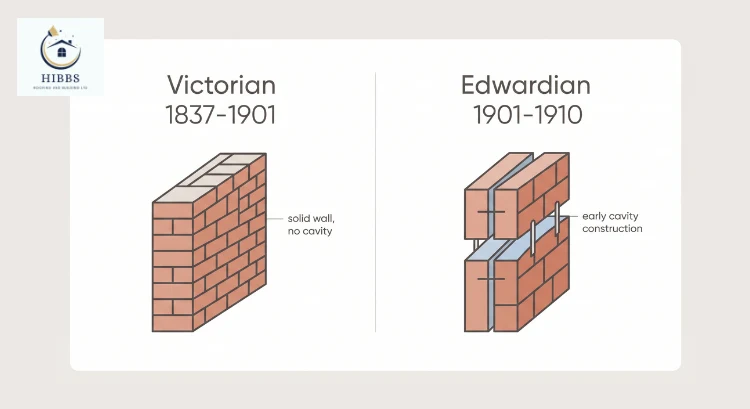
Solid brick or stone walls, lime mortar, and no cavity: that’s the standard build for most pre-1920s British housing. The whole system relies on moisture moving through the wall and evaporating from the surface, rather than being sealed in or blocked out.
Modern materials work on the opposite principle. Cement render, gypsum plaster, and non-breathable paints all trap moisture instead of letting it escape, which is why a “modern fix” applied to an old wall so often makes things worse, not better.
Signs Of Damp In Victorian Homes
Rising damp in a stone cottage or terrace, particularly where the property has no damp-proof course at all, common in pre-1875 builds
- Tide marks or staining low on solid brick or stone walls
- Crumbling lime mortar or render that’s been patched with modern cement
- Rising damp in a stone cottage or terrace, particularly where the property has no damp-proof course at all, common in pre-1875 builds
Signs Of Damp In Edwardian Homes
Edwardian homes (roughly 1901 to 1910) sit at the transition point, some still solid wall, some with early cavity construction. Watch for:
- Similar tide-mark staining, but check whether the property has an early cavity wall, since treatment differs
- Bay windows and single-skin extensions, common Edwardian features that are especially prone to penetrating damp
Why Damp Often Shows Up Right After You Move In
Here’s something most damp guides don’t mention: a house that “coped fine” for decades under the previous owner can suddenly develop damp within months of a new family moving in.
The reason usually isn’t the building. It’s the change in how it’s used. New owners tend to heat more consistently, shower more often, dry laundry indoors, and seal up draughts that used to let moisture escape. All of that increases the moisture load on a house built to manage a very different, leakier lifestyle. The damp isn’t new. The conditions revealing it are.
Have You Accidentally Sealed Your House? A Quick Self-Check
Three separate changes, often made for entirely reasonable reasons, can quietly disrupt a period home’s original ventilation system. Worth checking all three together:
Sealed or capped chimneys
A flue that once drew air steadily through the house now traps moisture when blocked at both ends.
Blocked air bricks or subfloor vents
Suspended timber floors need airflow beneath them. Block it, and you’ll often get musty smells and springy floorboards that look like rising damp but aren’t.
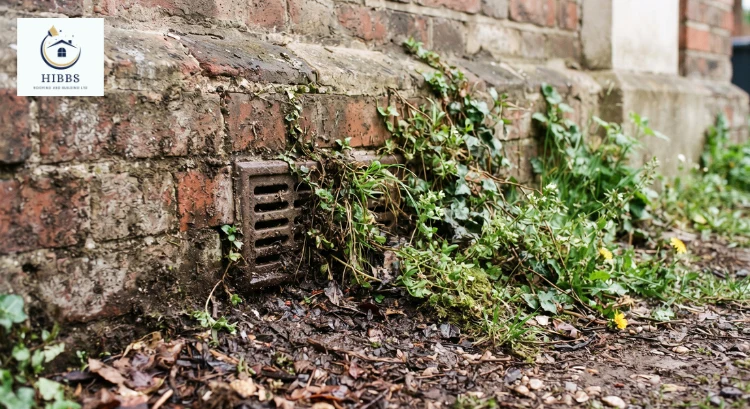
Raised ground levels
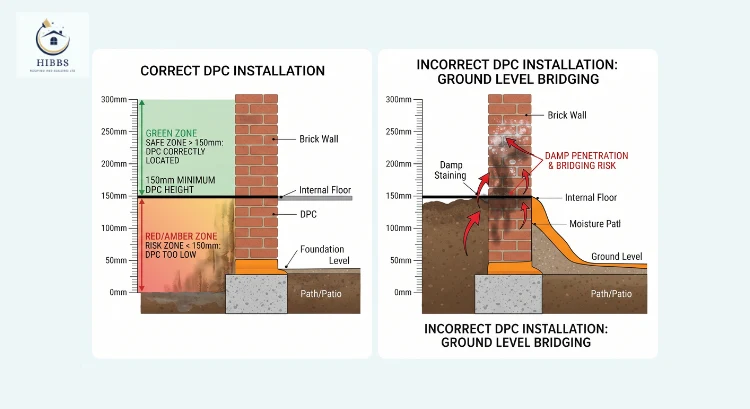
Paths, patios, or flower beds built up over the years can bridge the damp-proof course, giving moisture a way around the barrier entirely.
If two or three of these apply to your property, that’s very likely part of the story.
Two Types Of Damp You Might Not Have Heard Of
Beyond the three damp types most people know, two more specific categories show up in older properties:
Hygroscopic damp
Caused by salts left behind in the wall from a previous damp problem. These salts actively draw moisture from the air, so the wall stays damp even after the original cause has been fixed.
Bridging damp
Not really a separate type, more a description of what happens when something, whether that’s render, soil, or a path, physically bridges the damp-proof course and lets moisture cross a barrier that should be stopping it.
Both are common enough in old houses with no damp course, or where a course exists but has been compromised, that it’s worth knowing the terms even if a full explanation belongs elsewhere. For the difference between the two most common types, our guide on how to spot rising damp vs penetrating damp covers it in full.
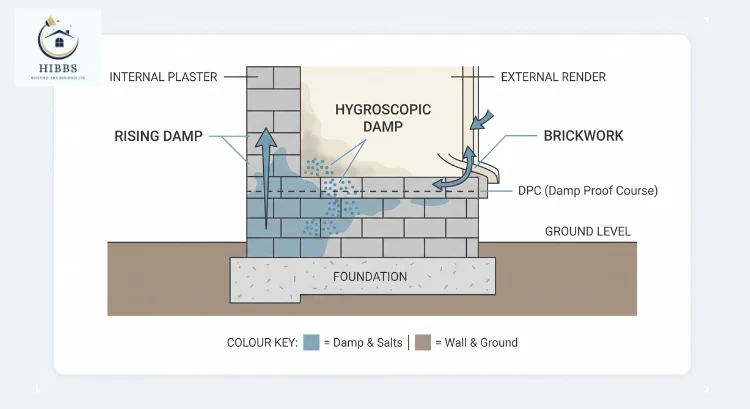
Is Your Damp-Proof Course Actually Working? The 150mm Check
Here’s one you can genuinely check yourself. A damp-proof course should sit at least 150mm above external ground level. Grab a tape measure and look at where the DPC line is (usually visible as a slightly different mortar course near the base of the wall) relative to the ground outside.
If it’s less than 150mm, or if you can’t find a DPC at all, that’s a strong signal worth acting on, particularly relevant for pre-1875 properties that may never have had one installed.
Condensation Or Rising Damp? A Simple Humidity Test
Condensation in old houses is often mistaken for rising or penetrating damp, especially in poorly ventilated rooms. A cheap humidity meter helps tell them apart.
Indoor relative humidity consistently sitting above 65-70% points toward condensation as the likely cause, rather than a structural issue with the wall itself. It’s not a diagnosis on its own, but it’s a genuinely useful first check before assuming the worst.

When To Get A Professional Damp Survey
Some signs are manageable with basic maintenance. Others genuinely need a trained eye:
- You’ve already tried the obvious fixes and the damp hasn’t budged
- The affected area covers more than one wall or room
- You’re renting and reporting it, in which case your landlord has legal obligations around timely repairs. If you’re in social housing specifically, Awaab’s Law now sets strict timeframes for damp and mould: 10 working days to investigate a hazard, a further 3 working days to provide a written summary, and just 24 hours for emergency cases
- The property has a history of damp, since older homes often have more than one cause layered together
If you’re at that point, damp proofing in Ashford from a specialist who understands period construction is worth arranging before making further assumptions.
Caring For Damp In Ashford’s Period Homes
Ashford has no shortage of Victorian terraces and Edwardian semis, many still with their original solid walls and lime mortar intact, or at least partially so after a century of piecemeal repairs. Streets like those around the town centre and older parts of Willesborough carry a real mix of building ages side by side, which means two houses on the same road can need completely different treatment depending on when they were built and what’s been done to them since.
Getting the mortar mix and repair approach right for a property’s specific age matters just as much as identifying the damp itself; a Victorian terrace with no cavity needs a different fix to an Edwardian semi with early cavity construction, even if the staining looks identical. Pricing varies accordingly too, since floor treatment and wall treatment aren’t the same job; our guide to damp proofing cost in Ashford breaks down typical figures by treatment type. That’s where working with roofers in Ashford who understand period properties makes a genuine difference.
Conclusion
Damp in a Victorian or Edwardian home rarely has a single, simple cause. It’s usually the result of a breathable building meeting a modern lifestyle, sealed chimneys, raised ground levels, or a render that was never suited to the wall behind it. Spotting the early signs and understanding why period construction changes the picture puts you in a much stronger position than guessing.
If you’re seeing any of the signs covered here, or you’re simply not sure what you’re dealing with, the team at Hibbs Roofing and Building Ltd can take a look and tell you exactly what’s going on. It’s worth getting a free quotation in Ashford before the damp spreads further.
Frequently Asked Questions
Is damp common in Edwardian houses?
Yes, particularly around bay windows, single-skin extensions, and the transition-era construction found in many Edwardian homes, which combines solid-wall sections with early cavity techniques.
What are the first signs of damp in a house?
Musty smells, especially near skirting boards or in enclosed rooms, along with faint discolouration on walls before any visible staining appears. Catching it at this stage is far cheaper than waiting for a full tide mark to develop.
How do you treat rising damp in an old house?
Treatment depends on the actual cause rather than a single fix, but it typically starts with checking the damp-proof course height and condition, addressing any bridging from raised ground levels or render, and using breathable repair materials rather than modern cement, which can trap moisture in a wall built to let it escape. A proper survey should confirm the cause before any treatment begins, since old houses often have multiple issues layered together.
What’s the difference between hygroscopic damp and rising damp?
Rising damp is moisture actively travelling up through the wall from the ground. Hygroscopic damp is caused by salts already sitting in the wall from a past problem, and those salts keep drawing moisture from the air even after the original cause has been fixed, which is why treating the wrong one leaves the wall damp regardless of how the DPC is doing.
