

A pitched roof installation is any roof built with a slope of 10 degrees or more, tiled or slated, and fitted with felt, battens and ridge tiles to shed rain and snow. In Ashford, a full pitched roof replacement typically runs from around £5,000 for a small terraced house up to £15,000 or more for a large detached property, depending on size, material and access.
That is the short answer. Here is what actually happens on your roof, what it costs, and how to pick the right material for a Kent home.
What Counts As A Pitched Roof Installation
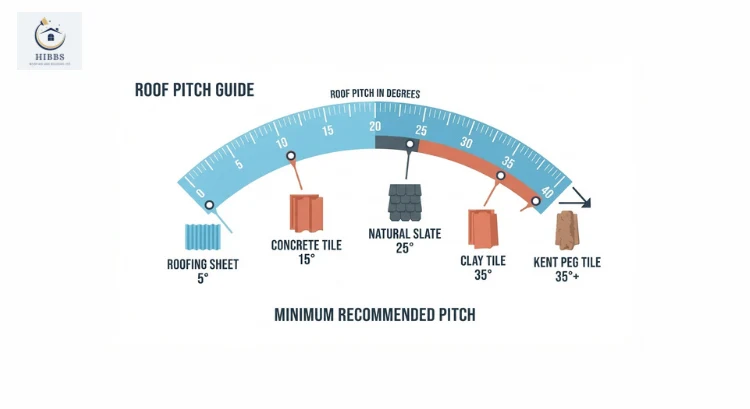
Any roof that slopes counts as pitched. What changes is the minimum angle your chosen covering needs to work properly.
- Roofing sheets can go as low as 5 degrees.
- Concrete tiles generally need at least 15 degrees.
- Clay tiles need more, often 35 degrees or steeper.
- Kent peg tiles, common on older Ashford homes, also need a steep pitch, usually above 35 degrees.
These minimums come from BS 5534, the British Standard covering slating and tiling. It is not just a guideline. Building control checks against it, and getting the pitch-to-material match wrong is one of the most common reasons a new roof fails early.
If you are not sure what shape roof you have, our guide to roof types in the UK covers gable, hip, mansard, and local Kent shapes, and explains how the shape affects installation.
The Installation Process, Step By Step
A full pitched roof installation follows the same sequence whether it is a small extension or a whole-house re-roof.
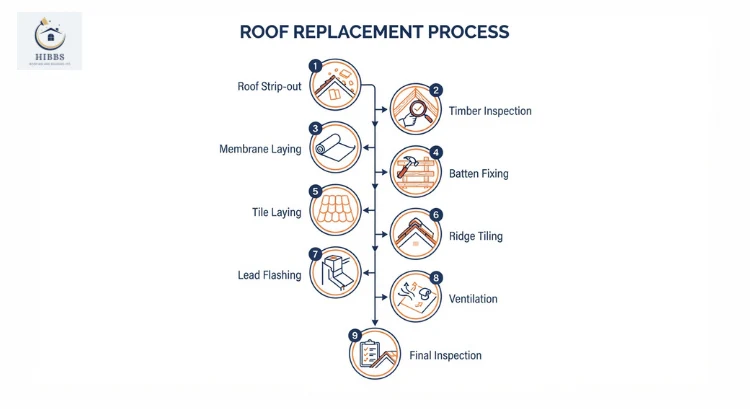
- Strip-out
We remove old tiles, felt, and battens down to the rafters. We flag any rotten or damaged timber here.
- Timber check and repair
We inspect the rafters and replace any weak or damaged sections before installing anything new.
- Membrane
A breathable roofing membrane goes over the rafters. This layer stops water from getting in if a tile ever slips.
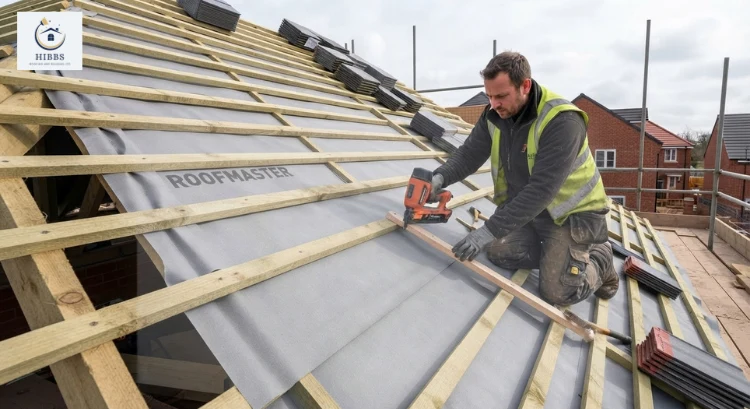
- Battens
Timber battens are fixed horizontally across the membrane, spaced to match your chosen tile or slate size exactly.
- Tiling or slating
Tiles or slates go on from the bottom edge upward, each row overlapping the one below.
- Ridge and hips
Ridge tiles are bedded and pointed along the top, and any hip lines are finished to match.
- Flashing
Lead flashing goes in around chimneys, valleys and any wall junctions. This is the single most common place a pitched roof leaks, so it matters more than the tiling itself.
- Ventilation
Vents are fitted at eaves or ridge level to stop condensation building up in the roof space.
- Snagging and inspection
A final check for loose tiles, gaps or missed flashing before the job is signed off.
On a straightforward gable roof, a full re-roof usually takes one to two weeks. Add hips, valleys, dormers or a steep mansard face, and it takes longer, mainly because of the extra scaffolding and cutting involved.
How Much Does A Pitched Roof Cost In Ashford?
Cost depends on roof size, material, pitch complexity and access. As a general guide, based on typical UK installation pricing:
| Material | Typical Cost Per m² | Notes |
|---|---|---|
| Concrete tile | £40 to £60 | Most affordable, widely used on post-war and modern Ashford homes |
| Clay tile | £60 to £90 | Common on Victorian and Edwardian terraces |
| Natural slate | £70 to £120 | Long lifespan, standard on older townhouses |
| Kent peg tile | £90 and up | Handmade, often reused where possible on period properties |
Labour typically makes up 40 to 60 per cent of the total bill. Scaffolding, skip hire and any timber repair found during strip-out are usually priced separately, so a quote that looks unusually low often has one of these missing.
These are general ranges, not a quote. The only accurate figure comes from a survey of your specific roof. If your roof only needs patching rather than a full install, our guide to roof repair costs in the UK breaks those figures down separately.
Want an accurate figure, not a range?
Every roof is different. Get a free, no-obligation survey and a clear, itemised quote for your pitched roof installation in Ashford.
Choosing The Right Material For Pitched Roofs
The material decision usually comes down to the property’s age and style, not personal preference alone.
- Concrete tile suits modern estates and straightforward re-roofs where budget matters most.
- Clay tile suits Victorian and Edwardian terraces where the original roof was clay.
- Natural slate suits Georgian and Victorian townhouses and lasts longer than any common covering.
- Kent peg tile is specific to older and listed buildings around Ashford, and the aim is usually to save and reuse the originals rather than replace wholesale.
Our full breakdown of roofing materials compares lifespan, weight and cost across all of these in more detail.
Planning Permission And The 2026 Building Regulations
Most like-for-like pitched roof replacements do not need planning permission. Changing the roof shape, raising the ridge height, or working on a listed building usually does. The Planning Portal’s guidance on roof building regulations sets out exactly when each applies.
Building Regulations approval is a separate matter and applies to nearly all re-roofing work, regardless of planning permission. The rules changed for 2026. Under the Future Homes Standard, new-build pitched roofs must now meet a maximum U-value of 0.11 W/m²K, a significant jump in required insulation thickness compared to older standards. The regulations also introduce airtightness testing and, for new dwellings, a requirement to plan for on-site renewable generation such as solar PV at the roof design stage. The Roof Tile Association’s breakdown for the pitched roofing sector covers what this means for roof design specifically.
This mainly affects new builds and major renovations rather than a standard like-for-like re-roof on an existing home, but if you are extending or converting at the same time as re-roofing, it is worth raising with your installer before work starts.
How Long Does It Take to Install a Pitched Roof, And What About Kent Weather?
Weather is the main variable in Ashford. Tiling and flashing cannot go on safely in heavy rain or high wind, so a spell of bad weather can push a two-week job into three. Winter installations generally take longer than summer ones for the same reason.
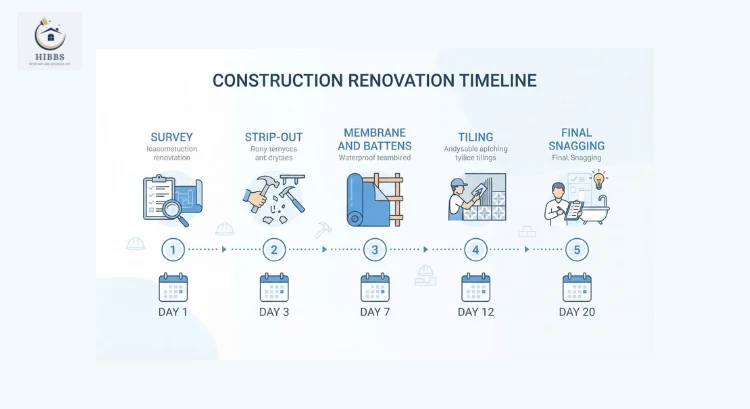
A good installer builds a weather contingency into the schedule rather than promising a fixed date regardless of the forecast.
Pitched Roof Installation In Ashford, Done Properly
Hibbs Roofing and Building Ltd has fitted pitched roofs across Ashford and the surrounding Kent villages for over 25 years, on everything from straightforward gable re-roofs to Kent peg tile work on listed buildings. Every job includes a written survey, a clear cost breakdown before work starts, and lead flashing done right the first time.
See our full roof installation services in Ashford, or get in touch for a free, no-obligation survey.
25 years of fitting pitched roofs across Ashford and Kent
Written survey, clear cost breakdown before work starts, and lead flashing done right the first time. Get your free, no-obligation survey today.
Frequently Asked Questions
How much does pitched roof installation cost in Ashford?
Costs typically range from around £5,000 for a small terraced roof to £15,000 or more for a large detached property, depending on material and access. Concrete tile is the most affordable option, while natural slate and Kent peg tile are the most expensive.
What is the minimum pitch angle for a tiled roof?
It depends on the tile. Concrete tiles generally need at least 15 degrees; clay tiles and Kent peg tiles need 35 degrees or more. These minimums are set out in British Standard BS 5534.
How long does a pitched roof installation take?
A straightforward gable roof usually takes one to two weeks. Roofs with hips, valleys or dormers take longer, and Kent’s weather can add extra days at any time of year.
Do I need planning permission for a new pitched roof?
Not usually, if you are replacing like-for-like. Changing the roof shape, raising the ridge, or working on a listed building typically does need permission. Building Regulations approval applies separately, regardless of planning permission.
What is the best pitched roof material for an Ashford home?
It depends on the property. Concrete tile suits modern homes on a budget, clay tile suits Victorian and Edwardian terraces, natural slate suits older townhouses, and Kent peg tile is for period and listed buildings where the originals need matching or reusing.
