
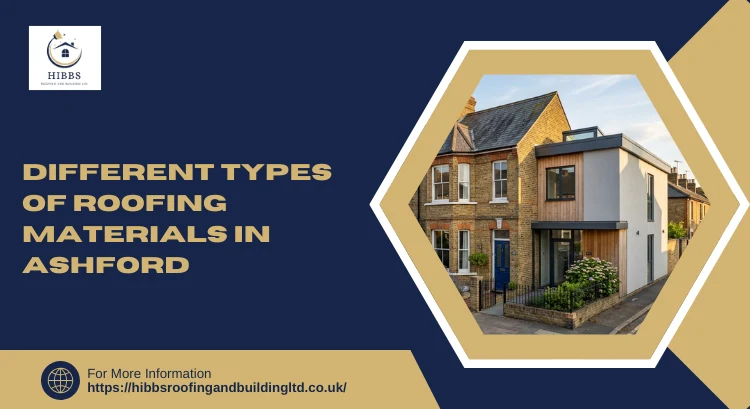
The main types of roofing materials used in the UK are natural slate, clay tiles, concrete tiles, and metal roofing for pitched roofs, and EPDM rubber, GRP fibreglass, and torch-on felt for flat roofs. Slate and clay tile last longest (50 to 100 years), while concrete, metal, and EPDM offer a lower-cost middle ground with lifespans of 25 to 50 years. A cheaper option might save money now but needs replacing twice before a premium one needs touching once, so the right choice comes down to trade-offs between upfront cost, lifespan, and maintenance, not appearance alone.
Location plays a bigger role in this decision than most people realise. Ashford has a mix of period terraces, newer estates, and properties inside conservation areas, and the roofing material that suits a Victorian terrace isn’t always the one that suits a 1990s extension. Getting this decision right at the start avoids a costly change of mind halfway through a project.
Get professional roofing services near you in Ashford: free inspection, honest advice.
View Our Roofing Services →Different Types Of Roofing Materials In Ashford
Ashford’s homes are covered by a genuine mix of roofing materials, from traditional pitched roofs on period terraces to modern flat-roof extensions, and the choice of material is one of the most visible and long-lasting decisions you’ll make about your property.
Natural Slate
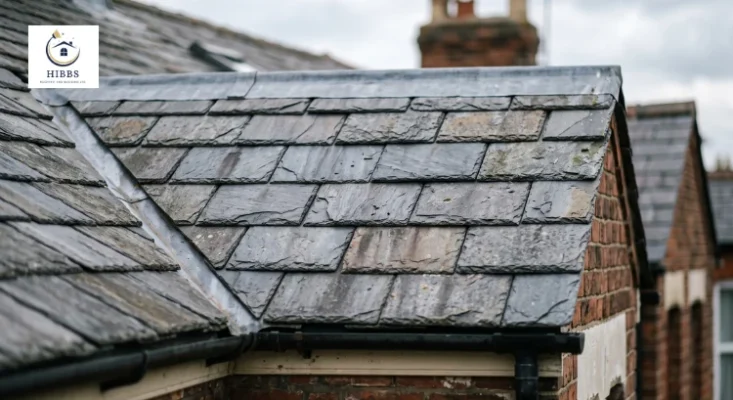
Slate is quarried stone split into thin, flat tiles, and it’s the longest-lasting roofing material in common use. Because it’s natural, no two roofs look quite the same, and it’s a familiar sight on Ashford’s older and listed properties, where planning rules often require it to be retained or matched like-for-like.
Common types:
Welsh slate (the traditional UK standard), Spanish slate (a widely used, cost-effective import), and synthetic or fibre-cement slate (a lighter, budget alternative designed to mimic the natural look).
Advantages:
- Exceptional lifespan, often 80 to 100 years or more
- Highly resistant to fire, frost, and heavy weather
- Natural material with a distinctive, high-end appearance
- Typically required or preferred on listed and conservation-area properties
Limitations:
- One of the more expensive materials, both to buy and to install
- Heavy, so the roof structure needs to support the load
- Requires an experienced installer to fit and repair correctly
Slate roofs also depend heavily on the detailing around chimneys, valleys, and abutments; most failures on older Ashford roofs start with how the lead is fitted, not the slate itself.
Lifespan:
80–100 years
Best for:
Period properties, conservation areas, long-term value
Clay Tiles
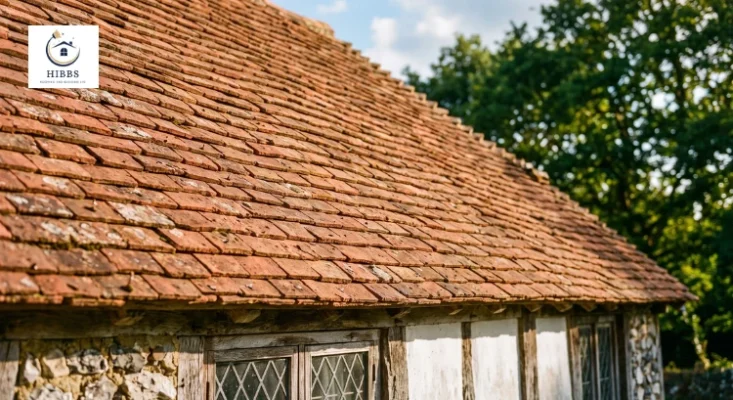
Clay tiles are moulded and kiln-fired, giving them a strength and colour that holds up for decades. They’re a traditional choice across Kent and suit the character of older Ashford properties without the cost of natural slate.
Common types:
Plain clay tiles (small, flat, the classic look on Kent terraces), pantiles (an S-shaped profile giving a distinctive wave pattern), and interlocking clay tiles (designed to fit together tightly for extra weather resistance).
Advantages:
- Long lifespan with excellent colour retention over time
- Naturally fire-resistant and low maintenance once installed
- Wide range of styles to match period and character properties
Limitations:
- Heavier than concrete, so structural suitability needs checking
- More expensive than concrete tiles
- Individual tiles can crack under impact or foot traffic
Lifespan:
50–70 years
Best for:
Period and character properties wanting a traditional look at a lower cost than slate
Kent Peg Tiles
Kent peg tiles are a smaller, more curved variant of the plain clay tile, traditionally hung on pegs rather than nailed, and they’re one of the most distinctive roofing materials in this part of the country. You’ll spot them on older cottages, oasts, and barns across Kent, often with a slightly irregular, handmade look that newer materials can’t fully replicate.
Advantages:
- Historically authentic look, often required on listed buildings in Kent
- Excellent weather performance when properly hung and maintained.
- Ages well, developing character rather than wear
Limitations:
- Harder to source than standard clay or concrete tiles.
- Requires a roofer familiar with traditional hanging methods.
- More expensive than standard plain tiles due to specialist labour.
Lifespan:
50–80 years
Best for:
Period Kent properties, oasts and barns, listed buildings where authenticity matters.
Concrete Tiles
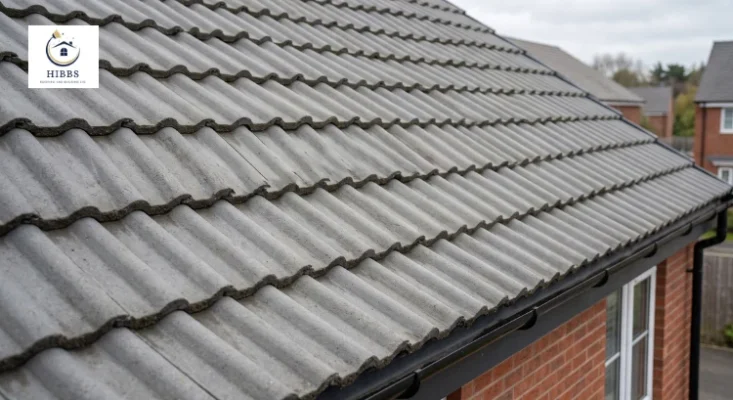
Concrete tiles are the most common roofing material on modern UK homes, largely because they’re cost-effective and available in styles that mimic clay or slate.
Common types:
Interlocking concrete tiles (the standard choice on most new builds) and flat concrete tiles (a slate-effect alternative at a lower price point).
Advantages:
- Lower cost than natural materials, both to buy and install
- Wide availability and a broad choice of colours and profiles
- Good weather performance for the price
Limitations:
- Shorter lifespan than slate or clay
- Can fade in colour over time compared to fired clay
- Heavier than metal roofing systems
Lifespan:
30–50 years
Best for:
New builds, estate properties, larger roofs on a budget
Metal Roofing
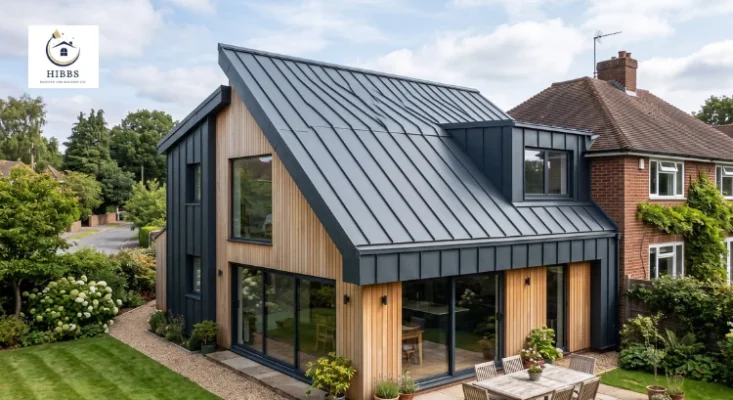
Metal roofing is manufactured from steel, aluminium, zinc, or occasionally copper, and has become increasingly common on extensions and contemporary properties thanks to its low weight and long service life.
Common types:
Standing-seam panels (raised, interlocking seams for a clean, modern finish) and box-profile sheeting (a cost-effective corrugated option common on outbuildings).
Advantages:
- Lightweight, reducing the load on the roof structure
- Long lifespan with minimal maintenance
- Performs well against heavy rain, wind, and snow
Limitations:
- Less traditional appearance, not always suited to conservation settings
- Can be noisy in heavy rain without proper insulation underneath
- Higher upfront cost than concrete tiles
Lifespan:
40–50 years
Best for:
Extensions, outbuildings, and contemporary-style properties
Zinc Roofing
Zinc is a premium metal roofing option that develops a natural, self-healing patina over time, giving it a longer working life than standard steel or aluminium roofing.
Advantages:
- Long lifespan, often 60 to 100 years
- Self-healing surface that resists scratches and weathering
- Fully recyclable and low-maintenance once installed
Limitations:
- Higher upfront cost than other metal roofing options
- Requires a specialist installer
- Less traditional appearance, better suited to contemporary properties
Lifespan:
60–100 years
Best for:
Contemporary extensions, architect-designed properties, long-term value
EPDM Rubber
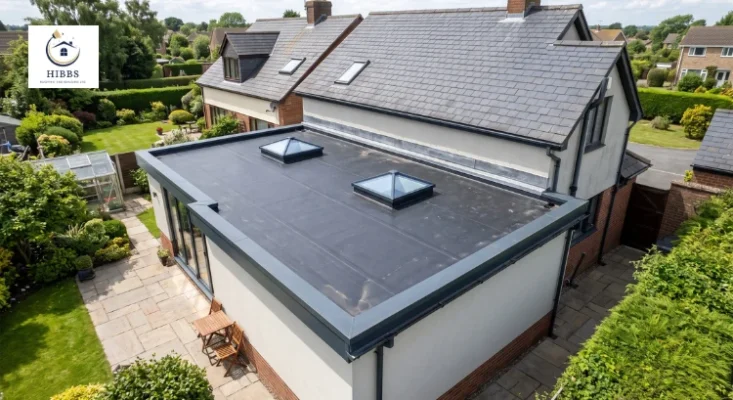
EPDM is a synthetic rubber membrane and currently one of the most reliable flat roofing materials available, typically supplied in large rolls that leave few, if any, seams.
Advantages:
- Long lifespan with very few seams to fail
- Flexible, so it handles thermal movement and minor structural shifts well
- Low maintenance once properly installed
Limitations:
- Plain, uniform appearance with limited colour options
- Edge detailing needs to be finished carefully to avoid early failure
- Can be punctured by sharp impact if not protected
Lifespan:
25–50 years
Best for:
Extensions, garages, and general flat roof replacements
GRP Fibreglass
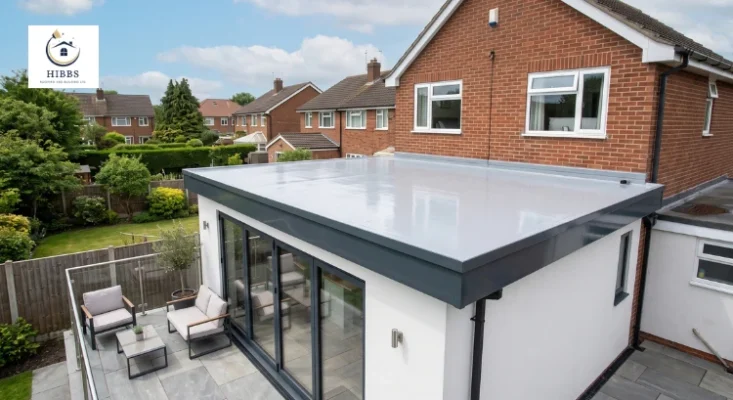
GRP (glass-reinforced plastic) is applied as a liquid resin that cures into a single, seamless, waterproof surface, making it a popular choice where appearance matters, such as balconies or roof terraces.
Advantages:
- Completely seamless, reducing the most common cause of flat roof leaks
- Available in a range of colours and finishes
- Very strong once cured, and can be walked on
Limitations:
- Requires a skilled, experienced installer to avoid cracking
- More expensive than felt
- Can be damaged if the substrate beneath it moves or flexes
Lifespan:
25–40 years
Best for:
Balconies, terraces, and flat roofs where a smooth, moulded finish is wanted
Felt (Torch-On)
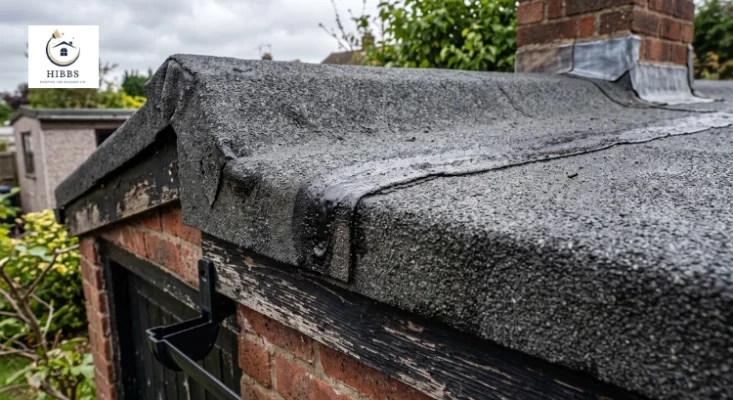
Modern torch-on felt is a multi-layer bituminous system applied with heat, and it’s a step up in performance from the traditional felt many homeowners associate with older flat roofs.
Advantages:
- Lowest upfront cost of the common flat roofing materials
- Performs reasonably well in cold weather
- Straightforward to repair in small sections
Limitations:
- Shortest realistic lifespan of the three main options
- Seams between layers are a common point of failure
Lifespan:
20–30 years
Best for:
Budget-conscious flat roof projects, outbuildings, smaller extensions
How To Choose The Right Roofing Material For Your Property
Once you know the main options, the right choice comes down to a handful of practical factors specific to your property and how long you plan to stay in it.
Check what your property actually needs
A period terrace and a modern extension rarely need the same material; get recommendations for each part of the roof separately, rather than assuming one material has to cover the whole property.
Factor in planning restrictions
If your property is in a conservation area or listed, your roofing material choice may be restricted, particularly for anything visible from the street. The Planning Portal is a good starting point for checking whether permission applies, alongside advice from roofers familiar with local conservation areas.
Check with trusted roofers familiar with local conservation areas before ordering materials. Older properties also tend to carry damp issues alongside roof work, and damp proofing costs in Ashford are priced entirely separately from the roof covering.
Match the material to your roof pitch
Not every material works on every roof angle. Steeper roofs (35 degrees or more) shed water quickly and suit plain tiles, slate, and Kent peg tiles well. Lower-pitched roofs (15 to 22.5 degrees) need a material designed to channel water more actively, which is where interlocking or Roman-profile tiles perform better. Anything below around 15 degrees generally needs a flat roofing material like EPDM, GRP, or torch-on felt rather than a tiled system. If you’re not sure what pitch your roof falls into, a roofer can confirm this on a site visit before you commit to a material.
Still Not Sure Which Material Is Right For Your Roof?
Every property is different; get an honest, no-obligation recommendation from a local Ashford roofer.
Get a Free RecommendationThink beyond the initial cost
The cheapest material upfront often isn’t the cheapest over 20 years. Weigh lifespan against price per m² rather than comparing quotes on cost alone.
Ask what the material is actually suited to
Exposure matters as much as looks; a roof facing prevailing wind and rain needs a different level of weather resistance than a sheltered one. A contractor should be able to explain why they’re recommending one option over another for your specific roof, not just quoting whichever is easiest to source.
Material is only half the decision
The right roofing material still depends on the right contractor installing it. If you’re weighing that up too, see our guide on how to choose a trusted roofing company in Ashford for what to check before you hire.
Why Choose Hibbs Roofing And Building For Your Roofing Needs
Hibbs Roofing and Building Ltd has over 25 years of experience working with the full range of roofing materials across Ashford, from natural slate on period terraces to flat roofing systems on modern extensions. Whatever your property needs, we’ll recommend the material that best suits it, not the one that’s easiest for us to source.
Alongside material advice, we provide a full range of roofing installation services in Ashford, including roof installation and repair and specialist lead work for flashing and detailing on both new and existing roofs
25+ Years of Experience in Ashford
Why Choose Hibbs Roofing And Building
We work with the full range of roofing materials across Ashford, from natural slate on period terraces to flat roofing systems on modern extensions. We’ll recommend the material that best suits your property, not the one that’s easiest for us to source.
Get a Free Roof Inspection →Conclusion
There’s no single best roofing material, only the one that’s right for your property, your budget, and how long you plan to stay in it. Natural slate and clay tile deliver decades of low-maintenance performance if you can afford the upfront cost; concrete and metal offer a sensible middle ground, and modern flat roofing systems like EPDM and GRP have moved well beyond the short-lived felt roofs of the past.
Whatever direction you’re leaning, weighing lifespan and maintenance costs against the initial price, rather than focusing on cost alone, is what determines whether a roof is a good investment or an expensive one.
Related Articles
Frequently Asked Questions
What is the best type of roof material for a UK home?
For most traditional UK homes, natural slate or clay tile offers the best combination of longevity and weather performance, lasting 50 years or more with minimal maintenance. For budget-conscious or modern properties, concrete tiles or metal roofing offer solid performance at a lower cost.
What is the best type of flat roofing material?
EPDM rubber is generally considered the best all-round flat roofing material, offering a 25 to 50-year lifespan, low maintenance, and a seamless, reliable membrane. GRP is a strong alternative when you want a smoother, moulded finish.
What is the most durable roofing material overall?
Natural slate is the most durable roofing material in common use, with a lifespan of 80 to 100 years when properly installed and maintained. Among flat roofing options, EPDM rubber offers the longest realistic lifespan.
Can I mix different roofing materials on the same property?
Yes, this is very common. Many Ashford properties use pitched tiles or slate on the main roof and a flat material like EPDM or GRP on an extension or garage, and there’s no structural issue with combining these materials.
Do I need planning permission for a specific type of roofing material?
Not usually for like-for-like replacement, but if your property is listed or in a conservation area, restrictions can apply to the roof material you use, especially if it’s visible from the street. Check with your local planning authority or a contractor familiar with Ashford’s conservation areas before ordering materials.

Pingback: What Are Roof Shingles? Types, Costs & Benefits
Pingback: How Much Does Roof Repair Cost in UK? 2026 Price Guide
Pingback: How To Install Lead Flashing Properly: A local Ashford Guide
Pingback: How Much Does Damp Proofing Cost in Ashford: Avoid Overpaying
Pingback: How to Make Your Roof More Energy-Efficient (Ashford Guide)
Pingback: Types Of Roofs In The UK: A Simple Guide
Pingback: Pitched Roof Installation In Ashford: Complete Guide 2026
Pingback: Tiled Roof Installation Explained: A Homeowner's Guide 2026
Pingback: How Commercial Roof Installation Works: A Complete UK Guide
Pingback: Slate Roof Installation Process: A Complete Ashford Guide
Pingback: What Are Roof Battens | Types, uses, & How they are fitted?