

As a general rule, twice a year, once in late spring and once in autumn, covers most homes. Properties surrounded by trees or in exposed, storm-prone areas often require more frequent attention. Leave gutters blocked for too long, and you risk overflowing water, damp patches on walls, and lasting damage to your roofline. If it’s been a while since your last check, Hibbs Roofing and Building Ltd offers uPVC fascia and guttering services for both clearance and repair.
In this guide, we’ll walk you through exactly how often gutters need cleaning, the warning signs to watch for, what affects that frequency, and whether it’s safer to clean them yourself or call in a professional.

How Often Should Gutters Be Cleaned? A Quick Breakdown
The right schedule depends on the property, so it helps to see the baseline alongside situations that call for extra visits. The spring and autumn windows work well for most homes because they sit just after the two seasons that generate the most debris: winter storms and autumn leaf fall.
Property Type / Situation | Recommended Cleaning Frequency | Best Time of Year |
Standard UK home, few nearby trees | Twice a year | Spring (March–April) and Autumn (September–October) |
Home surrounded by mature or overhanging trees | Every 3 months | Spring, mid-summer, and autumn |
Bungalow or single-storey property | Twice a year, easier to check in between | Spring and Autumn |
Home in a windy, storm-prone, or coastal area | Twice a year, plus a check after any major storm | Spring, Autumn, and after winter storms |
Older property with sagging or ageing gutters | Every 3–4 months | Spring, summer, and autumn |
What Are The Signs Your Gutters Need Cleaning?

Even with a regular twice-yearly schedule, it’s worth knowing the warning signs between cleans, since debris can build up faster than expected in a windy season or after a spell of heavy rain. Most of these signs are visible from ground level, so a quick look upward every couple of months is usually enough to catch a problem early. Catching it at this stage means a straightforward clean rather than a costlier repair further down the line. Here’s what to watch for.
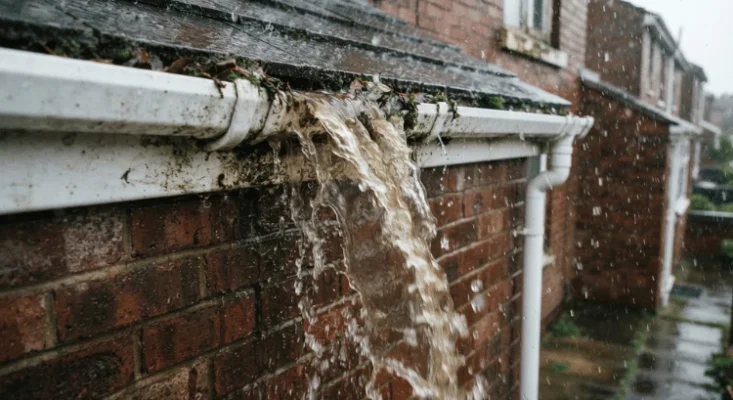
Water Overflowing During Rain
If water is spilling over the edge of the gutter rather than running through the downpipe, that’s usually the clearest sign of a blockage. A small amount of splashing in very heavy rain is normal, but a steady overflow in ordinary weather points to trapped debris further along the run.
Sagging or Detached Gutters
Gutters that visibly dip or pull away from the fascia board often carry more weight than they’re designed to, usually due to waterlogged leaves and dirt. Left unaddressed, this can loosen brackets and eventually bring the whole section down.
Standing Water or Visible Moss
Pools of water sitting in a gutter section, or moss and weeds growing along its length, both indicate debris that’s built up enough to trap moisture rather than let it drain away.
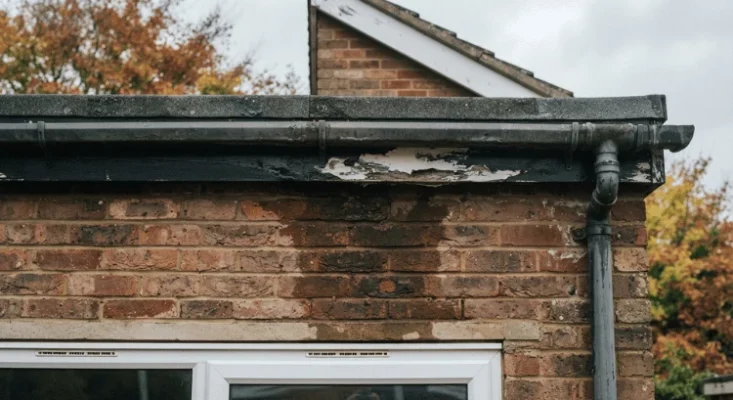
Damp Patches on Walls or Fascias
Blocked gutters often force water down the outside of the wall rather than into the downpipe, which can appear as damp staining, discolouration, or peeling paint on the brickwork or fascia boards below. Left long enough, this can develop into penetrating damp that affects the inside of the property too.
Factors That Affect How Often Your Gutters Need Cleaning
Twice a year is a solid general rule for how often gutters should be cleaned, but not every property fits that pattern exactly. Two homes on the same street can require completely different schedules once you factor in their surroundings, rooflines, and the condition of the gutter and fascia system itself. Knowing which of these apply to your own property makes it far easier to judge whether the standard schedule is enough or whether you need to check more often.
Nearby Trees
Homes with overhanging branches, particularly from pine, oak, or other heavy-shedding trees, collect leaves and twigs far faster than open properties. In these cases, checking every three to four months is safer than waiting for the standard twice-yearly clean.
Local Weather and Storm Exposure
Areas that see frequent strong winds or heavy storms, which Met Office severe weather warnings often note, need an extra check after any severe event, since wind can carry debris in from well beyond a homeowner’s own garden.
Roof Design and Moss Growth
Roofs with valleys, multiple sections, or shaded areas tend to funnel more debris into fewer gutter runs and are more prone to moss, both of which accelerate gutter clogging.

Gutter Material and Age
Older or poorly pitched gutter systems don’t drain as efficiently, so even a small amount of debris can cause pooling at low points that a newer system would otherwise clear on its own.
What Happens If Gutters Are Left Uncleaned?
Skipping a scheduled clean once or twice usually isn’t a disaster, but persistent neglect turns a simple maintenance job into a more expensive repair:
- Overflow and water spillage
- Damp patches on walls
- Weakened ground near foundations
- Pest infestations (insects, birds, rodents)
- Rotting fascia boards
- Roof timber damage over time
DIY Gutter Cleaning vs Hiring A Professional
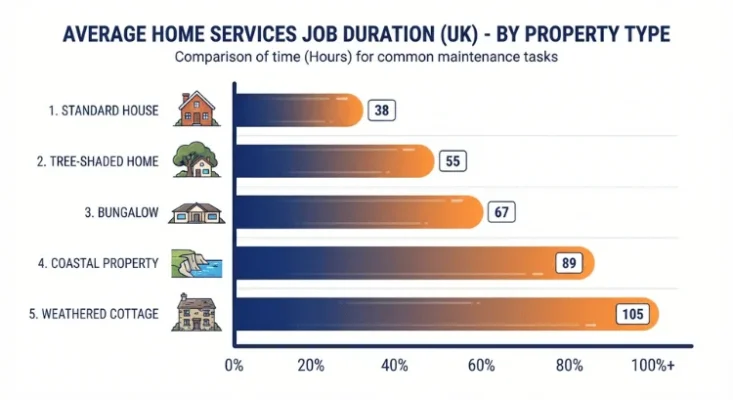
Once a clean is due, the next question is whether to do it yourself or hire someone. The right choice usually comes down to the height and access involved, and a simple clean typically takes 30 minutes to an hour on a smaller property, longer if debris has built up over multiple seasons.
Cleaning Gutters Yourself
For single-story properties with easy access, a sturdy ladder and a gutter scoop can be enough to clear light debris. It’s worth having someone hold the ladder steady while wearing gloves and following HSE guidance on safe ladder use, never leaning out further than is safe. Trimming back overhanging branches and installing gutter guards can also reduce the frequency of full cleanings, though neither entirely replaces the need for them.
When To Call A Professional
For anything above a single storey, or a roofline with valleys, multiple sections, or restricted access, a professional is the safer and often quicker route. The NFRC recommends a professional assessment for any roof work that involves height or structural access.
Hibbs Roofing and Building Ltd, based in Ashford, has over 25 years of experience providing roofing services in Ashford and surrounding areas, including Royal Tunbridge Wells and Canterbury, so any early signs of damage, sagging, or fascia problems get picked up and flagged before they turn into bigger jobs.
Conclusion
Most UK homes need their gutters cleaned twice a year, in spring and autumn, with extra checks for properties near trees or in storm-exposed areas. Watching for the early warning signs, overflow, sagging, moss, or damp staining, makes it much easier to stay ahead of blockages before they lead to damp or structural damage.
If you’d rather leave it to the professionals, Hibbs Roofing and Building Ltd offers gutter clearance and roof inspection services. Get in touch today for a free, no-obligation quote.
FAQs
Does the frequency of gutter cleaning change depending on where in the UK you live?
Yes. Properties in wetter, windier regions or those surrounded by mature trees typically need more frequent checks than homes in drier, more open areas.
Can blocked gutters affect a home insurance claim?
Yes. Insurers can sometimes decline claims for damp or water damage if they find the damage stemmed from long-term neglect, such as gutters that were never cleaned, rather than a sudden, unforeseen event.
Do gutter guards completely stop clogs?
No. They reduce the amount of debris that settles in the gutter, but occasional cleaning is still needed to clear whatever gets through.
Should I still clean my gutters if I don’t see any leaves or moss?
Yes. Fine dirt, grit from roof tiles, and small debris can build up even without visible leaves or moss, so sticking to the twice-yearly schedule is still worthwhile.
