
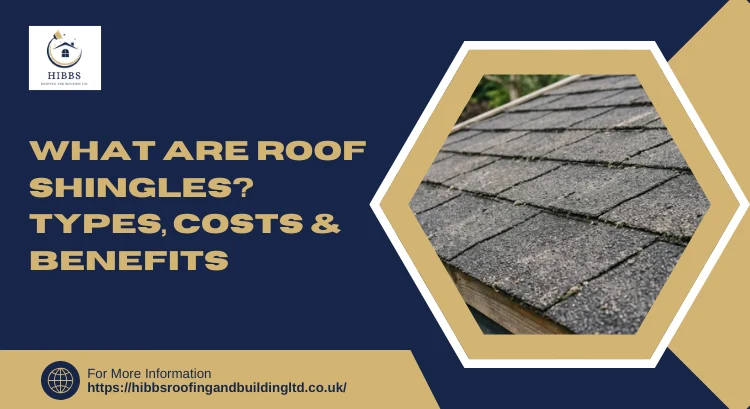
Roof shingles are individual, overlapping pieces of roofing material, laid in rows so each one sheds rainwater onto the row below and off the roof edge. In the UK, the term is often used loosely to mean roof tiles, but technically it covers a broader family of materials, including bitumen, metal, slate, timber and composite, some more common on sheds and extensions than on the main house
It’s the kind of thing that’s easier to get right with local knowledge on hand, since not every shingle type suits every roofline, and Kent’s weather has a way of exposing the wrong choice sooner rather than later. Experienced roofers in Ashford deal with this exact question regularly, and knowing what’s actually available before you speak to one means you’ll get more out of that conversation.
What Are Roof Shingles?
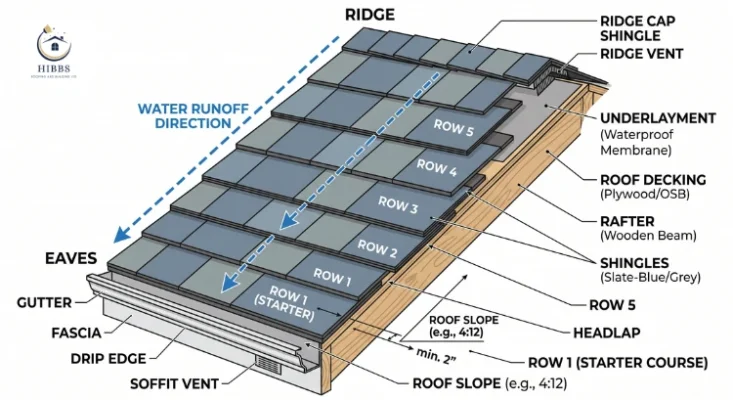
Roof shingles are individual, overlapping pieces of roofing material laid in rows from the eaves up to the ridge, with each row covering the joints of the one below it. That overlap is what makes the whole system watertight: rain runs down the surface and off the edge of each piece rather than finding a way underneath.
In the UK, “shingle” and “tile” are often used interchangeably, and in everyday conversation that’s fine. Technically, though, tiles usually refer to fired clay or moulded concrete pieces. At the same time, shingles cover a broader family that includes bitumen, metal, slate, timber and composite materials, some of which are more common on sheds, garages and outbuildings than on the main house. We’ll cover that distinction in more detail further down, since it’s one of the most common questions homeowners ask.
How Do Roof Shingles Work?
A shingle roof is built up in layers, and each one has a job to do. Underneath everything sits the timber deck, the structural base to which the rest of the roof is fixed. On top of that goes a breathable underlayment or roofing felt, which serves as a secondary water barrier if any moisture gets past the shingles. The shingles are then fixed in overlapping rows, usually nailed or clipped to battens, with the exposed portion of each shingle protecting the fixings of the row beneath.
Ventilation matters more than people expect. Without it, moisture can build up in the roof space and rot the timber deck from underneath, no matter how good the shingles on top are. A properly installed shingle roof accounts for airflow at the eaves and ridge as part of the build, not as an afterthought.
Types Of Roof Shingles And Their Pros & Cons
UK homeowners have several shingle materials to choose from, each with a different balance of cost, appearance, and durability. Here’s a closer look at the main options.
Bitumen (Asphalt) Roof Shingles
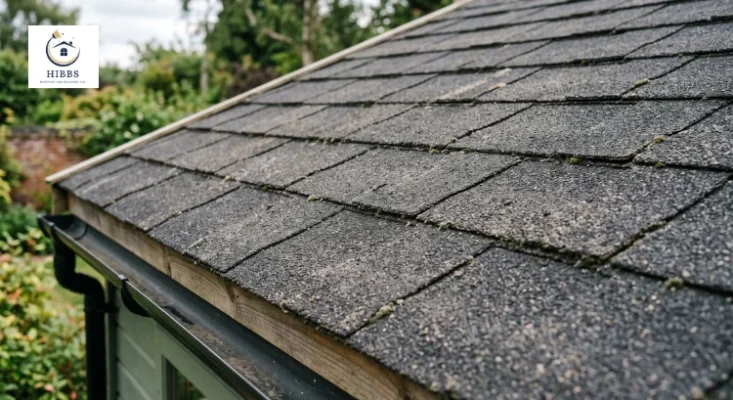
Bitumen shingles, sometimes called asphalt shingles, are made from a fibreglass or organic mat coated in asphalt and finished with mineral granules. They’re one of the most widely used shingle types worldwide, and in the UK they most often appear on garden rooms, garages, sheds, and the occasional contemporary extension, since planning restrictions in many areas limit their use on a house’s main roof.
Lifespan:
Around 15–20 years, though thicker “architectural” bitumen shingles can last longer.
Cost:
From around £40 per m² installed, making them one of the more affordable shingle options.
Pros:
- Low upfront cost compared to most other shingle types
- Straightforward to install, which keeps labour costs down
- Available in a wide range of colours and finishes
- Lightweight, so less strain on the roof structure
Cons:
- Shorter lifespan than metal, slate or timber
- More vulnerable to wind damage and granule loss over time
- Classed as hazardous waste when removed, adding a disposal cost
- Less environmentally friendly due to the petroleum-based material
Metal Roof Shingles
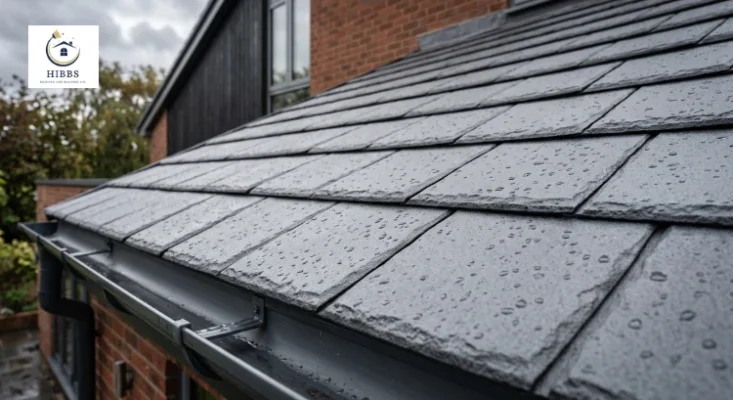
Metal shingles are pressed or stamped panels, usually steel, aluminium or zinc, shaped and finished to resemble traditional slate, tile or shake profiles while offering the strength and lifespan of a metal roof. They’ve grown in popularity on both extensions and full replacements where homeowners want a modern look without sacrificing durability.
Lifespan:
Typically 50–75 years, depending on the metal and coating used.
Cost:
Roughly £40–£80 per m² installed, varying by metal type and profile.
Pros:
- Long lifespan relative to cost
- Lightweight, often installed without the need for structural reinforcement
- Resistant to fire, rot, insects and cracking
- Low maintenance once fitted
Cons:
- Can be noisy in heavy rain or hail unless properly insulated
- Susceptible to denting from fallen branches or hailstones
- Higher upfront cost than bitumen
- Colour and finish options are more limited than some other materials
Clay & Concrete Tile Shingles
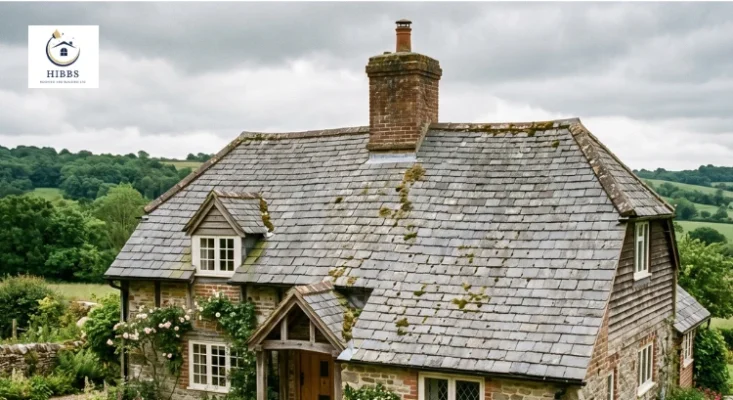
Though technically classed as tiles rather than shingles in the strictest sense, clay and concrete are worth including here since they’re by far the most common roofing material across Ashford and the rest of Kent, and homeowners often use the terms interchangeably when comparing options. Clay tiles are fired at high temperatures for a distinctive, long-lasting finish, while concrete tiles are moulded and cured, offering a similar look at a lower price point.
Lifespan:
Around 50–60 years for concrete, and 60–100+ years for clay.
Cost:
Roughly £45–£130 per m² installed for concrete, or £70–£160 per m² for clay.
Pros:
- Excellent durability and weather resistance
- Fits naturally with the character of most Kent housing stock
- Clay in particular holds its colour well over decades
- Widely available, with easy access to matching replacement tiles
Cons:
- Heavier than most shingle materials, so structural capacity matters
- Concrete tiles can fade or grow moss more readily than clay
- Clay costs more upfront and needs a skilled fitter
- Individual tiles can crack under impact, similar to slate
Solar Shingles
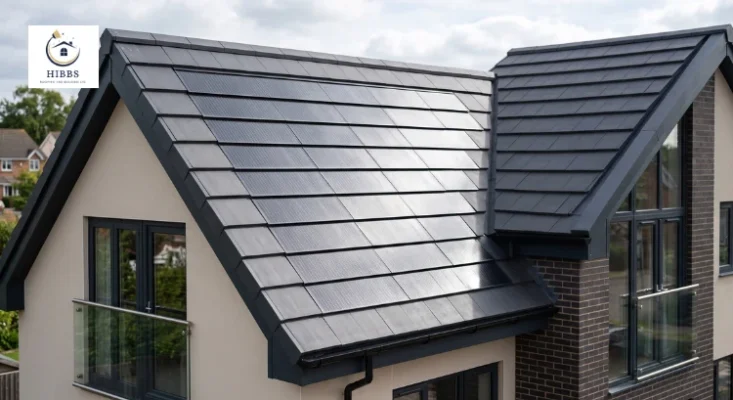
Solar shingles, sometimes called solar tiles or an integrated solar roof, are a newer option that combines weatherproofing with energy generation. Rather than fitting separate panels on top of a finished roof, each shingle contains photovoltaic cells built into its surface, so the roof itself generates electricity while still shedding rain like any other shingle. They remain a niche choice in the UK for now, but they’re increasingly coming up in conversations with homeowners planning a full re-roof alongside energy upgrades.
Lifespan:
Typically 25–30 years, in line with standard solar panel warranties.
Cost:
Significantly higher than other shingle types, often £250–£400+ per m² installed, depending on the system and roof complexity.
Pros:
- Generates electricity without visible panels sitting on top of the roof
- More discreet appearance than a bolt-on solar panel system
- Can reduce energy bills over the roof’s lifetime
- May qualify for available government incentives, depending on current schemes
Cons:
- Considerably higher upfront cost than any other shingle type
- Fewer UK installers currently experienced with the product
- Harder and more expensive to repair or replace individual units
- Efficiency depends heavily on roof orientation and shading
Slate Shingles
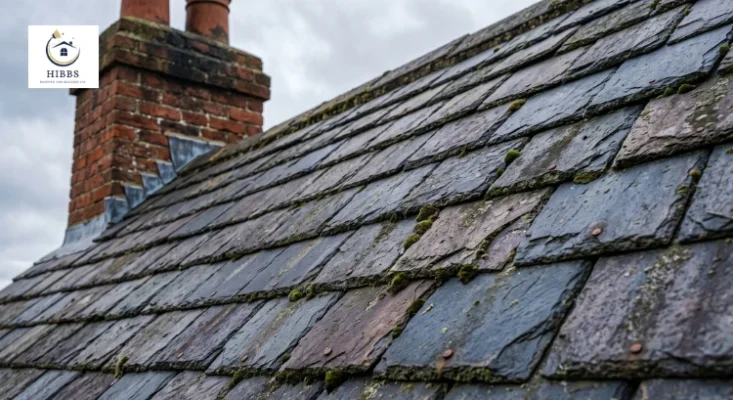
Natural slate is the traditional choice for period and heritage properties across Kent, and it’s easy to see why it’s stayed popular for well over a century. Each slate is a thin, individually fixed piece of natural stone, and a well-laid slate roof is one of the most weather-resistant options available in the UK.
Lifespan:
Commonly 50–100 years, with some well-maintained slate roofs lasting well beyond that.
Cost:
Around £160–£300 per m² installed for natural slate, depending on whether it’s Welsh or imported, or somewhat less for composite alternatives.
Pros:
- Exceptional durability and weather resistance
- Ages well and suits period and conservation-area properties
- Fire resistant
- Strong resale value and kerb appeal
Cons:
- Highest upfront cost of the common shingle types
- Heavy, so the roof structure needs to be able to support the load
- Requires a skilled, experienced roofer to install correctly
- Individual slates can crack and need replacing over time
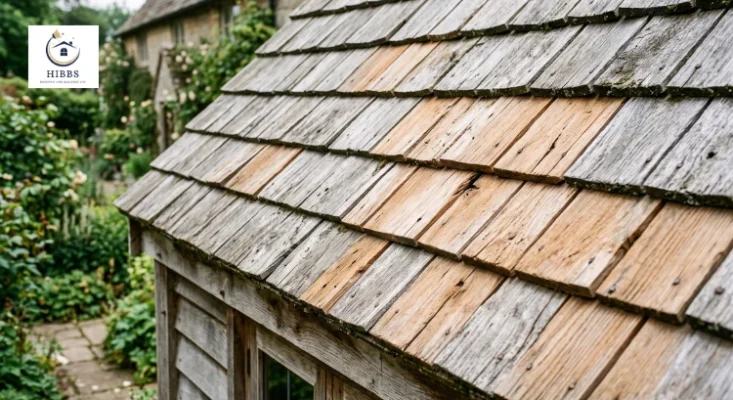
Timber (Cedar) Shingles
Timber shingles, most often cut from Western Red Cedar, give a roof a distinctive, natural look that suits cottages, garden buildings and architecturally distinctive new builds. They’re less common on standard Ashford housing stock, but they do appear on extensions and outbuildings where homeowners want real character.
Lifespan:
Around 30–50 years with proper treatment and maintenance.
Cost:
Roughly £100–£200 per m² installed, depending on grade.
Pros:
- Distinctive, natural appearance that ages to an attractive silver-grey
- Good insulating properties
- Sustainably sourced when FSC-certified timber is used
- Suits both traditional and contemporary architectural styles
Cons:
- Higher fire risk unless properly treated to meet building regulations
- Needs regular maintenance to prevent moss and algae build-up
- More expensive than bitumen or standard tile options
- Not typically suitable for the main roof of a standard semi or terrace
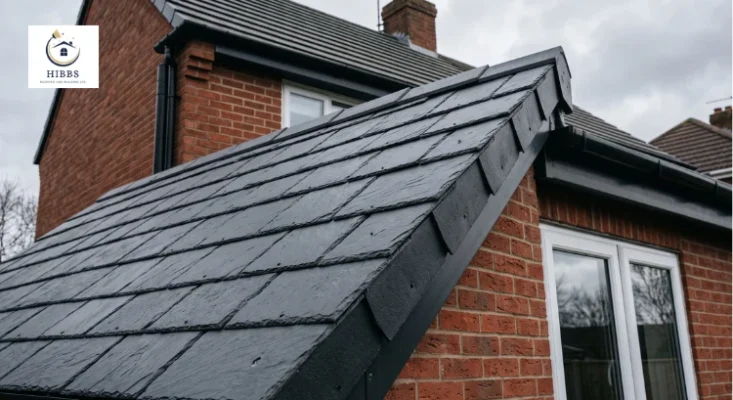
Composite Shingles
Composite, or synthetic, shingles are manufactured from a mix of materials such as rubber, plastic and resin, engineered to mimic the look of slate or timber shakes at a fraction of the weight and cost. They’ve become a popular middle-ground option for homeowners who want the look of natural slate but prefer something lighter and more budget-friendly.
Lifespan:
Typically 20–30 years.
Cost:
Around £40–£90 per m² installed.
Pros:
- Convincing slate or timber appearance at a lower price
- Much lighter than natural slate, reducing structural demands
- Consistent shape and colour, since they’re manufactured rather than quarried
- Generally low maintenance
Cons:
- Shorter lifespan than the natural materials they imitate
- Can fade or degrade under prolonged UV exposure
- Quality varies significantly between manufacturers
- Doesn’t carry the same resale appeal as natural slate on period properties
Benefits Of Roof Shingles Generally
Whichever material you choose, shingle-based roofing systems share common advantages over single-sheet roofing. Because each shingle is fixed individually, damage tends to stay localised. A cracked slate or a torn bitumen shingle can usually be replaced on its own, without disturbing the surrounding roof, which keeps repair costs down over the life of the roof.
Shingles also give you far more design flexibility than large-format roofing sheets. With colours, profiles and materials to choose from, it’s easier to match a new roof to a period property’s original character or to give a contemporary extension a distinct look. And because most shingle types are relatively lightweight compared with full masonry roofing systems, they’re often more straightforward to install, which can help keep labour costs proportionate to the size of the job.
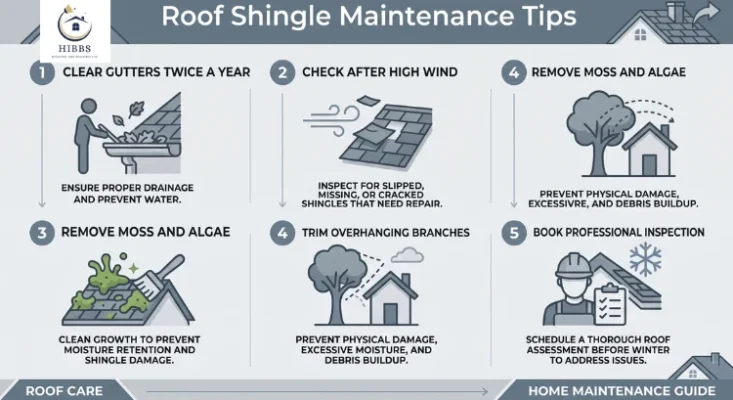
Maintenance Tips For Roof Shingles
A shingle roof doesn’t need constant attention, but a little regular upkeep goes a long way toward getting the full lifespan out of it.
- Clear gutters and downpipes at least twice a year so water doesn’t back up under the shingles at the eaves
- Check for slipped, cracked or missing shingles after any period of high wind.
- Remove moss and algae build-up promptly, particularly on north-facing slopes that stay damp longer.
- Trim back overhanging branches that could scrape the surface or drop debris.
- Book a professional inspection every few years, especially before winter, to catch small issues before they become expensive ones.
Are Roof Shingles Suitable for Homes in Ashford & Kent?
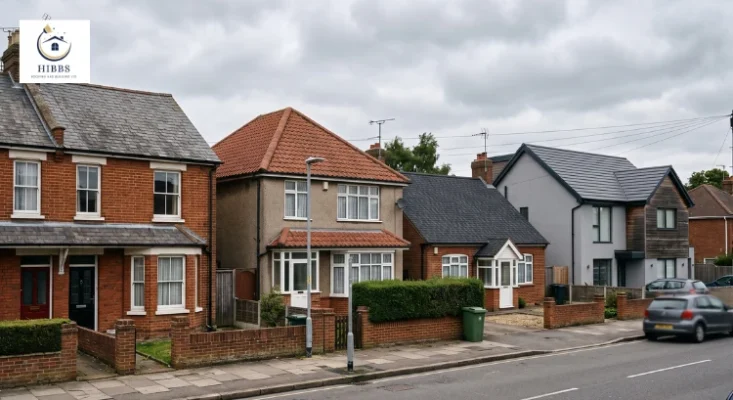
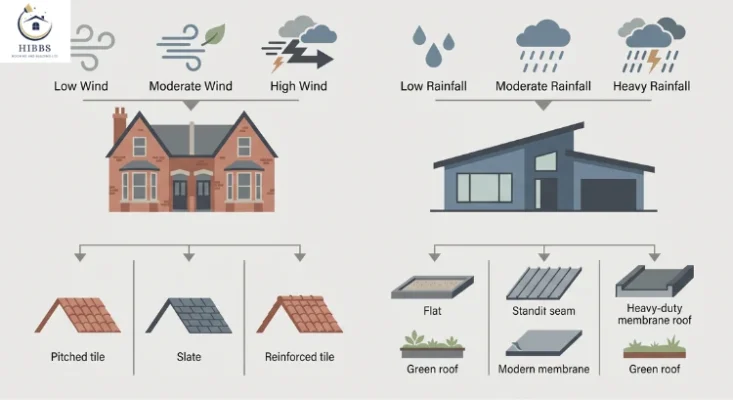
Ashford and the surrounding Kent countryside see a fair mix of exposed, windy conditions and heavy autumn and winter rainfall, which makes wind resistance and watertightness genuinely important factors rather than nice-to-haves. Metal and slate shingles tend to perform particularly well here, standing up to the coastal-influenced weather that comes in off the Channel without the granule loss or wind lift you sometimes see with lighter bitumen shingles. That’s why it pays to talk to an established roofing company in Ashford before settling on a material; they’ll know exactly how each option performs on local rooflines.
Property type matters just as much as climate. Ashford has many Victorian and Edwardian terraces alongside newer estates, and the right shingle choice often comes down to matching the material to the building rather than choosing on cost alone. Slate and timber tend to suit older, characterful properties, while metal and composite shingles work well on extensions and more contemporary builds. If your property sits within a conservation area, it’s also worth checking with the local planning authority before choosing a non-traditional material, since some areas restrict what can be used on street-facing roof slopes.
Roof Shingles Vs Roof Tiles
This is one of the most common points of confusion, and it’s worth untangling properly. In the UK, “tiles” almost always refers to fired clay or moulded concrete pieces, laid in overlapping rows much like shingles, but generally thicker, heavier, and more rigid. Tiles dominate the UK residential market and are what you’ll see on the vast majority of houses in Ashford and across Kent.
“Shingles,” by contrast, cover a wider range of thinner, lighter materials, including bitumen, metal, timber and composite options, alongside natural slate, which sits somewhere between the two categories depending on how it’s classified. The practical difference for homeowners usually comes down to weight, cost and appearance: tiles are heavier and typically need a robust roof structure to support them, while many shingle types are lighter and can suit extensions, outbuildings or properties where reducing structural load is a priority. Neither is objectively “better”; it depends on your property, budget and the look you’re after.
For a deeper look at how these compare, including Kent-specific options like peg tiles, see our full guide to types of roofing materials.
How To Choose The Right Shingle
A few practical questions can help narrow things down:
- What’s your budget, both now and long-term?
Bitumen costs less upfront but needs replacing sooner, while slate and metal cost more initially but spread that cost over a much longer lifespan.
- What does your property need structurally?
Older buildings or extensions with lighter framing may not suit the heaviest materials without additional structural work.
- Is the property in a conservation area?
This can rule out non-traditional materials on visible roof slopes.
- How exposed is the roof?
More exposed sites benefit from materials with stronger wind resistance, such as metal or slate.
- How much maintenance are you prepared to take on?
Timber shingles look fantastic but require more maintenance over the years than composite or metal shingles.
Quick-Reference Comparison
| Type | Typical Lifespan | Cost (installed, per m²) | Best For |
|---|---|---|---|
| Bitumen | 15–20 years | From £40 | Sheds, garages, budget projects |
| Metal | 50–75 years | £40–£80 | Extensions, modern renovations |
| Slate | 50–100+ years | £160–£300 | Period and heritage properties |
| Timber | 30–50 years | £100–£200 | Garden buildings, distinctive architecture |
| Composite | 20–30 years | £40–£90 | Slate look on a lighter budget |
Costs are UK averages sourced from Checkatrade and industry cost guides, correct as of 2026. Get a written quote for your specific property, as pricing varies by region, roof complexity and access requirements.
When To Call A Professional Roofer
Some signs shouldn’t wait for your next scheduled inspection. If you notice slipped, cracked, or missing shingles; damp patches on ceilings or in the loft; granules collecting in your gutters; or daylight visible through the roof deck, it’s worth getting a professional opinion sooner rather than later. Our guide on signs your roof needs repair covers these in full.
Get Expert Advice On Your Roof
Choosing the right shingle for your property is easier with a professional assessment of your roof, its structure, and its exposure to the elements. If you’re planning a new roof or replacement in Ashford or the surrounding area. Get in touch with Hibbs Roofing and Building Ltd for honest, no-obligation advice on the right material for your home.
Conclusion
There’s no single “best” roof shingle, only the right one for your property, budget and how long you want the roof to last before you think about it again. Bitumen keeps costs down for smaller structures; metal and composite offer a strong middle ground in durability and price; and slate remains the benchmark for period Kent properties built to last for generations. What matters most is matching the material to the building rather than choosing on looks or price alone, and that’s where a proper assessment from an experienced roofer makes the difference between a roof that performs for decades and one that needs revisiting far sooner than expected.
Frequently Asked Questions
What are roof shingles made of?
Roof shingles can be made from a range of materials, including bitumen (asphalt), metal, natural slate, timber and composite materials, each offering a different balance of cost, appearance and lifespan.
What are shingles on a roof used for?
Shingles form the roof’s outer, weatherproof layer. Laid in overlapping rows, they shed rainwater and protect the structure beneath from the elements.
How long do roof shingles last?
It depends on the material. Bitumen shingles typically last 15–20 years, while metal and slate can last 50 years or considerably longer with proper maintenance.
Are roof shingles the same as roof tiles?
Not quite. Tiles usually refer to clay or concrete pieces, while shingles cover a broader range of thinner, lighter materials, though people often use the terms loosely and interchangeably in everyday conversation.
Which type of roof shingle is best for a UK home?
It depends on your property and priorities. Slate suits period properties and long-term value, metal offers durability at a lower weight, and composite gives a similar look to slate at a lower cost. A professional roof assessment is the best way to decide.
