
Choosing the right roofing company comes down to a few checks: licensing and insurance, reputation and experience, a genuine local presence, multiple written quotes, clarity on who’s doing the work, the materials and workmanship on offer, and proper warranties.
How a company communicates with you along the way tells you almost everything about what working with them will actually be like.
Checks To Make When Choosing The Right Roofing Company In Ashford
Choosing A Roofing Company: Quick Checklist
Hibbs ticks every box — Book a Free SurveyIs The Roofing Company Licensed, Insured, And Properly Accredited?
Check three things before anything else: a valid trade license, public liability insurance, and workers’ compensation coverage if they employ staff. This baseline protects your property and their workers if something goes wrong on the job, and it’s non-negotiable.
Beyond the legal minimum, look for membership with a recognised trade body: the NFRC (National Federation of Roofing Contractors), the CRC (Confederation of Roofing Contractors), TrustMark, or the Competent Roofer scheme. Membership means the company has been vetted externally and agreed to work to a set standard, rather than just describing themselves as “accredited.” Ask to see proof rather than taking their word for it.
What Do Their Reviews And Experience Actually Show?
Read past the star rating: look at the specific jobs reviewers completed, and if possible, call a past customer directly to ask how the job actually went. A high average score hides a lot of variation in job type and size.
Experience with your specific roof type matters more than years in business alone. A company that’s spent a decade on slate roofs isn’t automatically the right fit for a flat roof job. Ask how long they’ve worked with the materials your job needs, and whether it’s a specialism or something they handle occasionally. A roofer confident in their track record will offer to connect you with a past customer directly; that willingness is one of the clearest signals of a reputable company. If you’re looking for experienced roofers in Ashford with a genuine track record, that openness about past work is exactly what to look for.
Ask how long they’ve worked with the materials your job needs, and whether it’s a specialism or something they handle occasionally. The same applies if damp work is part of the job, since damp proofing is priced and accredited differently from roofing and requires separate credentials, such as PCA membership.
Are They A Genuine Local Business?
Check for a real business address, a working landline or mobile, and an email address tied to their own domain rather than a generic contact form or a free webmail account. These are quick to verify and easy to fake if a company skips them.
A real local presence matters because it makes a company easier to hold accountable later. A business with a findable address and a consistent contact history is more likely to still be around next year; one without either is easier to walk away from after a bad job.
Hibbs Roofing has served Ashford for over 25 years, with a real Kent office, a landline you can call, and a track record homeowners can actually check.
See why local homeowners trust us →Why Should You Get More Than One Quote, In Writing?
Get at least three detailed estimates before deciding anything. Comparing quotes side by side is the only reliable way to spot one that’s unrealistically low (often a sign of corners being cut) or one that’s padded.
Once you’ve picked a company, insist the agreement is written down properly: scope of work, exact materials, timeline, and total cost, not a verbal agreement or a vague one-page estimate. A written contract is what you’ll rely on if a dispute comes up later. Our roof repair cost guide is worth a quick look first, so you know a fair price when you see one.
Will They Subcontract The Work, Or Do It Themselves?
Ask directly whether the company subcontracts, and to whom. Subcontracting itself isn’t a problem; plenty of legitimate companies do it. The problem is a company that doesn’t mention it upfront.
If subcontractors are involved, confirm they carry the same insurance and accreditation as the main company. A reputable roofer answers this without hesitation; one that dodges the question is worth reconsidering.
What Should You Ask About Materials and Workmanship?
Ask which manufacturers’ materials they use and why, not just what tier of product they’re offering. Vagueness here, or being steered toward the cheapest option without explanation, is a sign to press further.
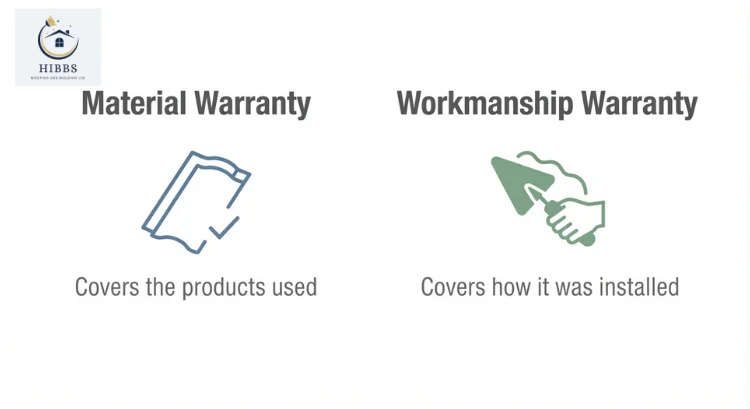
Workmanship is the other half: an honest roofer gives an accurate estimate upfront, uses the materials they quoted, and stands behind the finished job if a problem shows up later. The two only work together; even good materials fail if they’re poorly fitted. Leadwork is the clearest example: correctly installed lead flashing lasts 80 years or more, while a badly fitted piece of the same material can fail within five.
What Warranties and Guarantees Should You Check For?
Ask for two separate warranties in writing: a material warranty from the manufacturer, and a workmanship warranty from the installer covering the fitting itself. Companies sometimes mention only one, and a material warranty alone won’t cover damage caused by poor installation.
Read the actual terms rather than accepting “yes, we offer a warranty” as an answer. Check how long each one runs and exactly what’s excluded, since warranty length alone doesn’t tell you what’s actually covered.
No Pressure. No Full Upfront Payment. Fully Licensed.
Exactly the standard this article says to look for; that’s how we work.
Book Your Free SurveyHow Should A Good Roofing Company Communicate With You?
Expect an in-person inspection before you get a quote. A company pricing a job from a photo or a drive-by look hasn’t actually assessed the work, and the quote that follows is only a guess.
After the job, expect them to walk you through what was done, ideally showing you the finished roof rather than just telling you it’s finished. Watch whether they follow through on what they said upfront (turning up when promised, doing what was agreed), since that pattern predicts how the rest of the job will go far better than anything said in the sales conversation.
What Red Flags Should You Watch Out For while choosing a roofing company?
Three warning signs matter most, independent of everything else that looks fine on paper:
- High-pressure sales tactics: pushing you to sign on the spot or using a “limited time” discount to rush the decision. A confident roofer doesn’t need urgency to close a deal.
- Full payment upfront: a reputable company uses staged payments tied to job progress. Paying the full amount before work starts leaves you with no leverage if things go wrong.
- No clear answer on waste disposal: in the UK, disposing of construction debris legally requires a waste carrier’s licence. A company that can’t answer this specifically, beyond a vague “yes we clean up,” is often careless in other parts of the job too.
So, How Do You Choose the Right Roofer?
Run through the checks in this order: licensing and insurance first, then reputation, then at least three written quotes, then materials, warranties, and how they communicate. Walk away at the first unresolved red flag, regardless of how good the rest looks.
Explore our roofing services in Ashford and see for yourself why Ashford homeowners trust Hibbs Roofing and Building Ltd with their roofs.
View Our Roofing Services →Conclusion
None of these checks takes more than a phone call or a few minutes online, but together they separate a roofer who’ll still stand behind the job in five years from one who won’t be around to answer the phone. Take the time to verify licensing and accreditation, compare at least three written quotes, and get warranties in writing before anyone sets foot on your roof. A company with nothing to hide will welcome every one of these questions; that’s often the simplest test of all.
Related Articles
Frequently Asked Questions
How can I verify a roofer’s accreditation is genuine, not just claimed?
Most trade bodies publish a searchable member register online: the NFRC, TrustMark, and the Competent Roofer scheme all let you look up a company by name or postcode. If a company claims membership but doesn’t appear on the register, treat that as a red flag rather than an oversight.
What should a written roofing quote actually include, line by line?
A proper quote itemises labour separately from materials, names the specific product being used (not just “tiles” or “felt”), states start and completion dates, and sets out the payment schedule tied to project stages. A one-line total with no breakdown makes it hard to compare against other quotes or to spot what’s been left out.
What’s a reasonable deposit to pay before work starts?
Most legitimate roofers ask for a modest deposit, often around 10 to 25% of the total job cost, to cover materials they need to order. Anything close to the full amount upfront is outside normal trade practice.
What can void a roofing warranty after the work is done?
Common voiding conditions include unapproved alterations by another contractor, lack of routine maintenance (like clearing gutters), and damage from a separate issue (such as an unrelated structural problem) that the roofer wasn’t responsible for. Ask for these exclusions in writing at the time of the quote, not after a claim is refused.
Is a cheaper quote always a worse choice?
Not necessarily, but a quote significantly lower than the others is worth questioning rather than automatically accepting. It can sometimes mean lower-quality materials, a lack of proper insurance, or corners being cut somewhere you won’t see until later.
How long does a typical roofing job take?
This varies a lot by job size; a small repair might take a day, while a full re-roof on an average home often takes one to two weeks, weather permitting. A reputable company should give you a realistic timeline upfront, not a vague estimate.
Should a roofing guarantee be insurance-backed?
It’s worth asking. An insurance-backed guarantee still protects you even if the company closes down, while a contractor-only guarantee becomes worthless the moment they’re no longer around to honour it.
Do I need building regulations approval for roofing work?
Yes, most significant roofing work, including full re-roofing, requires Building Regulations approval in the UK. Contractors registered with the NFRC’s Competent Roofer scheme can self-certify the work, which saves you from applying to your local authority separately.

Pingback: How Much Does Roof Repair Cost in UK? 2026 Price Guide
Pingback: How To Install Lead Flashing Properly: A local Ashford Guide
Pingback: How to Make Your Roof More Energy-Efficient (Ashford Guide)
Pingback: What Is Damp Proofing And Why Your Home Needs It
Pingback: Types Of Roofs In The UK: A Simple Guide
Pingback: Tiled Roof Installation Explained: A Homeowner's Guide 2026
Pingback: How Commercial Roof Installation Works: A Complete UK Guide
Pingback: How Much Does A New Roof Cost In Ashford? 2026 Price Guide